Walk into any Nigerian household and mention the National Assembly, and you will likely get a shrug or a groan. Politics fatigue is real. But there is one office inside that building on Three Arms Zone in Abuja that quietly decides how fast, or how slowly, your life gets better. That office belongs to the Senate President.
The Nigerian Senate is one half of the National Assembly, the other being the House of Representatives. Together, these two chambers make up the legislative arm of government. The Senate itself has 109 members. Each of the 36 states sends three senators, while the Federal Capital Territory, Abuja, gets one seat. It sounds like a simple arithmetic exercise, but the politics inside that chamber is anything but simple, and the man who presides over it wields a level of power that most Nigerians underestimate.
The Senate President is not a glorified referee who just calls out names and manages arguments. He shapes the legislative agenda. He decides which bills get a hearing and which ones gather dust. He can influence policy on security, healthcare, education, and the economy simply by choosing what gets debated first. In the most dramatic scenarios, the Senate President can even set impeachment proceedings in motion against a sitting President or Vice President, provided the grounds meet constitutional muster.
Since independence in 1960, a long line of individuals has occupied this seat. Some were nation builders. Some were firebrands who refused to bow to executive pressure. Others were political heavyweights whose names still spark debate today. Understanding who they were, and how they rose and fell, tells you almost everything you need to know about how power actually works in Nigeria.
The Full List of Nigeria’s Senate Presidents (1960 to Present)
Before we get into the personalities and the drama, here is a quick reference table. It lists every person who has held the office of Senate President, along with their tenure and political party.
| Name | Term of Office | Political Party |
|---|---|---|
| Nnamdi Azikiwe | January 1, 1960 – October 1, 1960 | National Council of Nigeria and the Cameroons |
| Dennis Osadebay | October 1, 1960 – October 1, 1963 | National Council of Nigeria and the Cameroons |
| Nwafor Orizu | October 1, 1963 – January 15, 1966 | National Council of Nigeria and the Cameroons |
| Joseph Wayas | October 1, 1979 – December 31, 1983 | National Party of Nigeria |
| Iyorchia Ayu | December 5, 1992 – November 1993 | Social Democratic Party |
| Ameh Ebute | November 1993 – November 17, 1993 | Social Democratic Party |
| Evan Enwerem | June 3, 1999 – November 18, 1999 | People’s Democratic Party |
| Chuba Okadigbo | November 18, 1999 – August 8, 2000 | People’s Democratic Party |
| Anyim Pius Anyim | August 8, 2000 – June 3, 2003 | People’s Democratic Party |
| Adolphus Wabara | June 3, 2003 – April 5, 2005 | People’s Democratic Party |
| Ken Nnamani | April 5, 2005 – June 5, 2007 | People’s Democratic Party |
| David Mark | June 5, 2007 – June 6, 2015 | People’s Democratic Party |
| Bukola Saraki | June 9, 2015 – June 9, 2019 | All Progressives Congress (until 2018), then People’s Democratic Party |
| Ahmad Lawan | June 11, 2019 – June 13, 2023 | All Progressives Congress |
| Godswill Akpabio | June 13, 2023 – Present | All Progressives Congress |
Notice the huge gap between 1966 and 1979? That is not a typo. That gap tells its own story, and we will get to it shortly. For now, let us start from the very beginning, with the man who set the tone for everyone who came after him.
Nnamdi Azikiwe: The Man Who First Led Nigeria’s Senate
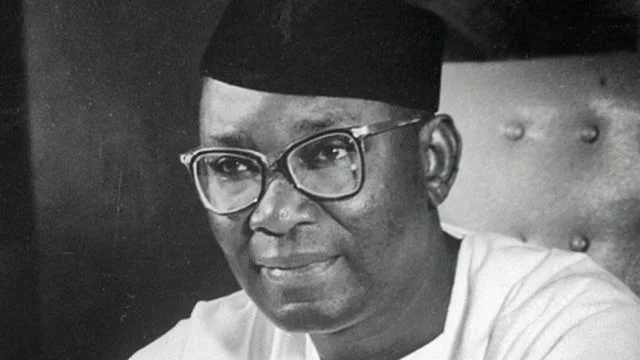
If there is one name every Nigerian schoolchild learns before they even understand what a senate does, it is Nnamdi Azikiwe. Born on November 16, 1904, in Zungeru, present-day Niger State, Azikiwe, popularly called Zik, was a journalist, a pan-Africanist, and one of the loudest voices against colonial rule anywhere on the continent.
His time as Senate President lasted only nine months, from January 1, 1960, to October 1, 1960. That might sound insignificant compared to some of the longer tenures on our list, but context matters here. This was the very first Senate of an independent Nigeria in the making. Azikiwe was not just filling a seat. He was building the credibility of an institution that had never existed in this form before.
Azikiwe’s résumé reads like something out of a history documentary. He studied in the United States at Lincoln University in Pennsylvania, then went on to the University of Pennsylvania, where he earned a Master’s degree in Anthropology and Political Science. That American education sharpened his writing and his public speaking, both of which he used as weapons against colonial administration. In 1944, he co-founded the National Council of Nigeria and the Cameroons, or NCNC, a party that became a driving force in the independence movement.
His role as Senate President in those early months was largely symbolic since actual executive power still rested with the British Governor-General and Prime Minister Tafawa Balewa. Even so, his presence in that chair gave the chamber a sense of gravity and purpose. When Nigeria became fully independent on October 1, 1960, the country switched to a parliamentary system, and Azikiwe moved on to an even bigger role: Governor-General, representing Queen Elizabeth II as Head of State.
By 1963, Nigeria had become a republic, and Azikiwe was sworn in as the country’s first President, a ceremonial post at the time. He held that title until the tragic coup of January 15, 1966, which claimed the life of Prime Minister Balewa and pushed Nigeria into decades of military interruption. Azikiwe survived and stayed relevant in politics for years afterward. He passed away on May 11, 1996, but the title “Father of Nigerian Nationalism” still belongs to him, and probably always will.
The Overlooked Pioneers: Osadebay and Orizu
Azikiwe gets most of the historical spotlight, understandably so. But the two men who followed him deserve more credit than they usually get.
Dennis Osadebay: The Poet Who Kept the Peace
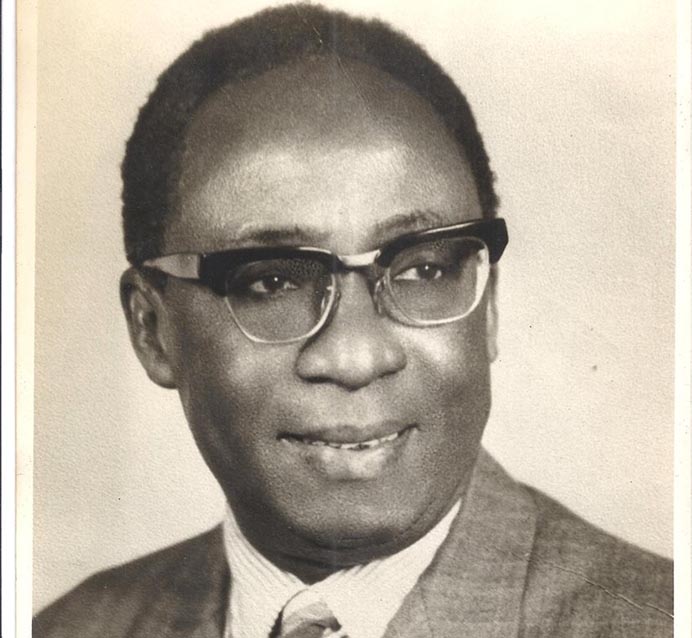
Dennis Osadebay took over the Senate Presidency from Azikiwe and served from October 1, 1960, until 1963. He was from Asaba, in what is now Delta State, and outside of politics, he was a respected poet and journalist. His tenure came at a delicate moment for Nigeria, a country still figuring out what it meant to govern itself.
Osadebay’s calm, steady leadership style helped keep the Senate stable during a period when regional and ethnic tensions could easily have spilled into open conflict. He is also remembered as one of the earliest and loudest voices calling for a Mid-West Region, a dream that came true in 1963. In a chamber full of strong personalities, Osadebay was the quiet unifier, and that mattered more than people realized at the time.
Nwafor Orizu: The Prince Who Handed Power to the Military
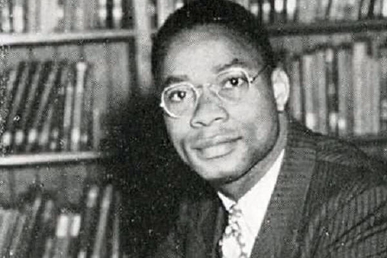
Next came Nwafor Orizu, a prince from Nnewi, in present-day Anambra State. Orizu was an educator and a committed pan-Africanist with deep roots in the NCNC. He became Senate President in 1963 and remained there until the coup of January 15, 1966, brought the First Republic to an abrupt halt.
Here is where things get historically heavy. In January 1966, while Azikiwe was traveling outside the country, Orizu briefly served as Acting President of Nigeria. It was during this short window that he made the fateful decision to hand over governance to the military, led by Major General Johnson Aguiyi-Ironsi. That single act marked the first time the Nigerian military formally took control of government, opening a chapter the country is still writing today.
When the Senate Went Silent: Nigeria’s Military Years
Look closely at the table above and you will spot a 13-year gap between Orizu’s exit in 1966 and Joseph Wayas taking over in 1979. That gap was not an accident or an oversight. The military banned political parties and dissolved the legislature entirely. For over a decade, decrees replaced debates, and the Senate simply did not exist.
Joseph Wayas and the Second Republic
When the military finally agreed to return power to civilians in 1979 under a new constitution, the Senate came back to life. Joseph Wayas, a senator from Cross River State and a member of the ruling National Party of Nigeria, was elected Senate President in October 1979 and served until December 31, 1983.
His time in office is remembered less for legislative achievement and more for the lavish lifestyle he cultivated while in power. Many Nigerians at the time saw his conduct as a symbol of the excesses that were rotting the Second Republic from the inside. When the military struck again on December 31, 1983, few were surprised. The corruption and political infighting of that era had made another coup feel almost inevitable.
The Short-Lived Third Republic
The Third Republic, under General Ibrahim Babangida, tried something unusual: a government-imposed two-party system. It produced a brief flicker of Senate activity in 1992, led first by Iyorchia Ayu from Benue State, a member of the Social Democratic Party.
Ayu’s tenure ran into the chaos surrounding the annulled June 12, 1993, presidential election, arguably the most controversial election in Nigerian history. By November 1993, Ameh Ebute, also of the SDP, had taken over. His time in office lasted only a few weeks before General Sani Abacha dissolved the National Assembly outright, closing the curtain on the Third Republic almost as soon as it opened.
Two Senate Presidents in less than a year should tell you everything about how unstable that period was. It was less a legislative era and more a holding pattern before the next round of military rule.
The Fourth Republic: A Chamber Defined by Power Struggles
Nigeria’s return to democracy in 1999 gave birth to the Fourth Republic, now the longest unbroken stretch of civilian rule in the country’s history. It has also been the most turbulent period for the Senate Presidency specifically. Since 1999, several Senate Presidents have been impeached, forced to resign, or pushed out through internal party maneuvering. The pattern is striking enough to be its own case study in Nigerian political science.
Evan Enwerem: Gone in Five Months
Evan Enwerem from Imo State became the first Senate President of the Fourth Republic in June 1999. His tenure barely lasted five months. Allegations of forged academic certificates, combined with a lack of solid backing among fellow senators, made his position untenable. By November 1999, he was out, setting a record for the shortest tenure of the entire republic.
Chuba Okadigbo: Brilliant but Combative
His replacement, Chuba Okadigbo from Anambra State, was one of the sharpest intellects to ever occupy the seat. He brought energy and boldness to the chamber, the kind of oratory that made people sit up. But his combative style and accusations of financial mismanagement caught up with him fast. He fought his impeachment all the way, but by August 2000, he was removed from office anyway.
Anyim Pius Anyim and Adolphus Wabara: A Return to Calm, Then Scandal
After two turbulent tenures in a row, the Senate turned to Anyim Pius Anyim, a comparatively low-key figure who served from 2000 to 2003. His main achievement was simply restoring some sense of order to a chamber that badly needed it.
That calm did not last. Adolphus Wabara took over in 2003, and his tenure ended in disgrace when he was accused of accepting bribes to fast-track the passage of the federal budget. The scandal forced his resignation in April 2005, another reminder of how quickly the office could turn from powerful to precarious.
Ken Nnamani: The Senate President Who Said No to a Third Term
Ken Nnamani from Enugu State served from 2005 to 2007, and his legacy is arguably one of the most important in the republic’s history. When then-President Olusegun Obasanjo pushed for a constitutional amendment that would have allowed him to run for a third term, it was the Senate under Nnamani that blocked it.
Think about that for a second. A sitting president, at the height of his political power, wanted the constitution rewritten in his favor, and the Senate said no. That moment is often cited as proof that the legislature can, when it chooses to, stand up to executive overreach.
David Mark: The Longest-Serving Senate President in Nigeria’s History
No discussion of the Senate Presidency is complete without David Mark. He took the seat in 2007 and held it for eight straight years, longer than anyone else on this list, before or since.
Mark, a retired Brigadier-General and former military governor, ran the Senate the way you would expect a former military officer to run anything: with discipline and a firm hand. He survived multiple impeachment attempts and managed to keep the chamber relatively stable across two different presidential administrations, first under Umaru Musa Yar’Adua and then under Goodluck Jonathan.
People called him “the stabilizer,” and whether you think that stability came at the cost of independence or not, the numbers speak for themselves. Serving two full terms as Senate President, the maximum allowed under the Nigerian Constitution, is something nobody had managed before him and nobody has managed since.
Bukola Saraki and the Rise of an Independent Senate
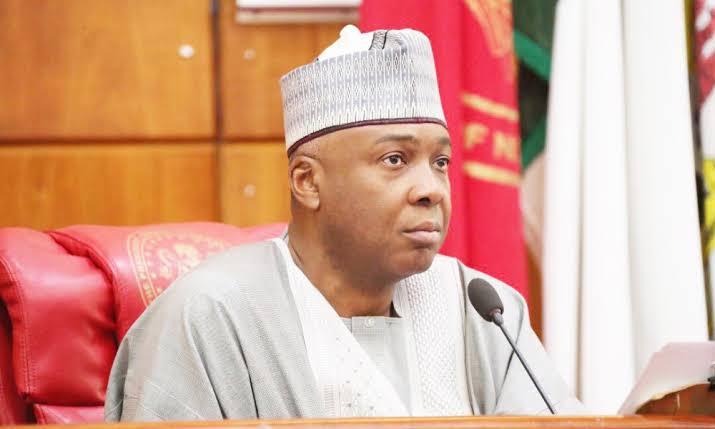
The 2015 election changed a lot of things in Nigeria. The All Progressives Congress unseated the People’s Democratic Party after 16 years in power, a genuine political earthquake. In the middle of that shakeup, Bukola Saraki, a former governor of Kwara State, pulled off one of the boldest political moves in recent memory.
Saraki secured the Senate Presidency in an election that went directly against the wishes of his own party’s leadership. That single act put him at odds with the executive from day one. His tenure, from 2015 to 2019, was defined by near-constant friction with the presidency, made worse by corruption allegations that trailed him through the courts for years.
Yet under Saraki, the Senate operated with a level of independence rarely seen in the Fourth Republic. Whether you view that as principled resistance or political survival, the effect was the same: a legislature that occasionally pushed back against the executive instead of simply rubber-stamping its wishes.
Ahmad Lawan: Restoring Party Control
Heading into the 2019 elections, the APC leadership was determined not to repeat the Saraki experience. They threw their weight behind Ahmad Lawan, a senator from Yobe State known for being a consensus builder and a loyal party man.
Lawan’s tenure, from 2019 to 2023, looked almost like the opposite of Saraki’s. The Senate under his leadership worked closely with the executive, prioritizing electoral reform and major economic bills. That cooperation had its upside, since things moved faster. But critics argued it came at a cost, with the Senate increasingly seen as an extension of the presidency rather than an independent check on its power.
Godswill Akpabio: Nigeria’s Current Senate President
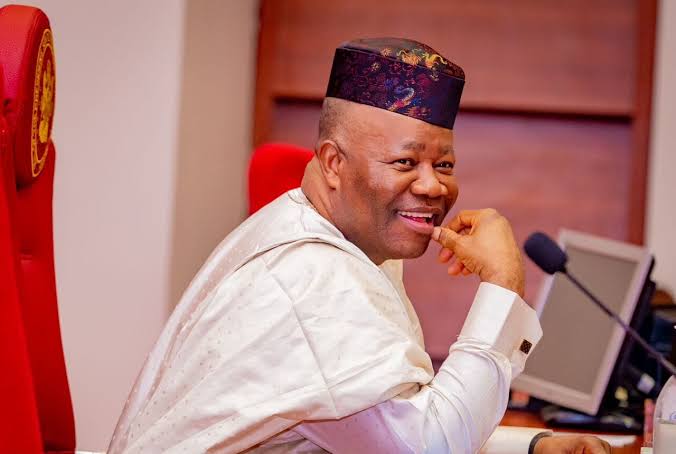
Today, the man in charge of Nigeria’s Red Chamber is Senator Godswill Akpabio, born on December 9, 1962, in Ukana, Essien Udim Local Government Area of Akwa Ibom State. He was inaugurated as the 14th President of the Senate on June 13, 2023, alongside the swearing-in of the 10th National Assembly. He is a member of the ruling All Progressives Congress.
His path to the Senate Presidency was not smooth. The race was heavily contested, and Akpabio secured the position only after intense political maneuvering and backing from his party. That contest alone tells you how much this office is still fought over, even decades after Azikiwe first sat in that chair.
Akpabio did not walk into the Senate as a political newcomer. He served as Governor of Akwa Ibom State from 2007 to 2015, a tenure best remembered for its aggressive infrastructure push. Roads, hospitals, schools, stadiums, he built enough of them to earn the nickname “Uncommon Transformer.” Some praised the vision behind those projects. Others questioned the cost and execution. Either way, that record built his national profile long before he ever became Senate President.
Before politics, Akpabio built a career in law, studying at the University of Calabar and later earning a Master’s in Law from the University of Lagos. That legal background shows up in how he handles procedural matters on the Senate floor.
As Senate President, his duties go beyond presiding over sessions. He represents the Senate in official capacities both within Nigeria and abroad, and he sits third in the presidential line of succession, right after the Vice President, though constitutional scholars still debate the finer details of that order in the rare event of a double vacancy.
His tenure has not escaped controversy. Critics accuse him of running the Senate too closely in step with the executive, echoing the same complaints leveled against Lawan before him. He has also faced corruption allegations tied to his years as governor, all of which he denies. Controversy aside, Akpabio remains one of the most powerful men in the country right now, and how he wields that power will shape a great deal of what happens in Nigeria over the next few years.
Meet the Deputy Senate President: Barau I. Jibrin
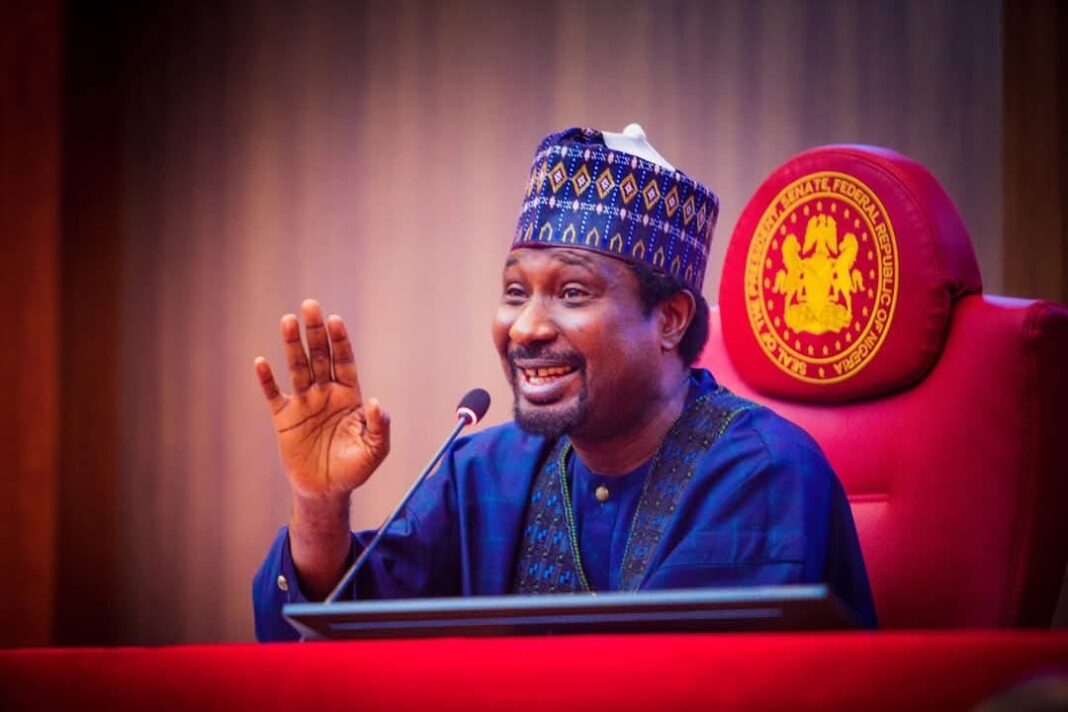
Working beside Akpabio is Deputy Senate President Barau I. Jibrin, born March 22, 1958, in Kano State. He has represented Kano North Senatorial District since 2015 and belongs to the APC.
Jibrin is not the flashy type. He built his reputation on being methodical and detail-focused, which makes sense once you learn his background. He holds a Bachelor’s degree in Business Administration from Ahmadu Bello University, Zaria, and he is a Fellow of the Institute of Chartered Accountants of Nigeria. That accounting background shows up clearly in how he handles financial matters in the chamber.
Before stepping into the deputy role, Jibrin served on committees dealing with finance, national security, and appropriations. His selection as running mate to Akpabio was partly strategic too, pairing a Christian from the South-South with a Muslim from the North-West, a balance that matters a great deal in Nigerian politics.
As Deputy Senate President, Jibrin presides over sessions whenever Akpabio is unavailable, and he chairs the Senate Committee on Appropriations, one of the most influential committees in the entire National Assembly. That committee controls how the national budget gets shaped and scrutinized, giving Jibrin considerable behind-the-scenes influence.
Outside his legislative duties, Jibrin has sponsored several bills focused on education, healthcare, and infrastructure in his home constituency. He is, by most accounts, the quieter half of the current Senate leadership, but do not mistake quiet for unimportant. His technical expertise adds a layer of oversight that the chamber genuinely needs.
Why the Senate President’s Chair Matters More Than You Think
Maybe you are reading this and wondering why any of it should matter to you. Fair question. Here is the honest answer: the person sitting in that chair affects your life in ways that are easy to overlook but hard to escape.
The Senate President controls the legislative agenda. That single fact explains a lot. He decides which bills get debated first and which ones sit untouched for months, sometimes years. Consider a real example: a proposed increase to the national minimum wage. That bill needs to be scheduled, debated, and passed. A Senate President focused on pro-worker policy can push it through relatively fast. One more interested in political score-settling can let it gather dust indefinitely.
Here is a quick breakdown of how this office touches everyday life:
- Security: Approval of military and police budgets depends on Senate priorities. Delays in the chamber mean delays in equipment, training, and salaries for security personnel.
- Healthcare: Funding bills for hospitals and primary healthcare centers need Senate attention before they become reality.
- Jobs and the economy: A stable, functional Senate signals political stability, which investors watch closely before committing money to Nigerian markets.
- Accountability: The Senate confirms key appointments, including the Inspector General of Police, service chiefs, and heads of anti-corruption agencies. How thoroughly these confirmations are handled depends on the Senate President’s leadership style.
In other words, this is not a ceremonial title collecting dust in a history book. It is a functioning lever of power that touches over 200 million Nigerians, whether they realize it or not.
What Six Decades of Senate Leadership Teach Us
Stepping back and looking at this list as a whole, a few patterns jump out immediately.
First, the office is unstable by design or by habit, take your pick. Since 1999 alone, multiple Senate Presidents have been impeached or pressured into resigning. That kind of turnover suggests a political culture more focused on settling personal scores than on steady lawmaking. Every time the Senate gets distracted by internal drama, real legislative work grinds to a halt. That is time and momentum Nigeria genuinely cannot afford to waste.
Second, the executive branch casts a long shadow over who gets this job. Time and again, the Senate Presidency has been handed to whoever the sitting president prefers, rather than emerging purely from an independent legislative process. That dynamic creates Senate Presidents who often feel more loyal to the person who helped install them than to the idea of an independent legislature checking executive power.
Saraki’s tenure stands out precisely because it broke that pattern, and the friction it caused with the presidency proves just how rare genuine independence is in that chair. Lawan and now Akpabio have largely returned to the more cooperative model, for better or worse depending on who you ask.
Third, individual character shapes outcomes more than the office itself does. Compare Okadigbo’s fiery, combative style to Nnamani’s quiet but firm resistance against a third-term agenda, or David Mark’s disciplined, almost military approach to keeping order. Same title, wildly different results. The Senate President’s personality and priorities end up shaping how the entire chamber functions for years at a time.
| Lesson | What It Means for Nigeria |
|---|---|
| Frequent turnover | Legislative priorities get interrupted, slowing down policy that affects citizens directly |
| Executive influence | Weakens the separation of powers, a core pillar of stable democracy |
| Individual leadership style | Determines whether the Senate acts as a genuine check or simply follows executive direction |
So where does that leave things now? Akpabio’s tenure is still being written, and history will judge it the same way it judged everyone before him, by results, not by promises. The real question worth asking is not who the next Senate President will be, but whether Nigerians will start demanding more independence and accountability from whoever holds that chair next. That pressure, more than any single individual, is what will eventually decide whether the Red Chamber serves the people or simply serves the presidency.