Alright, let us talk about the fascinating journey of leadership in Nigeria’s Land of Beauty. You might know Adamawa State for the majestic Benue River, the stunning Mandara Mountains, or its bustling commercial hubs. But behind the scenery lies a political history that is as dynamic and dramatic as any Nollywood script. If you have been searching for a definitive guide or the complete list of governors of Adamawa State, you have finally landed in the right place.
We are going to walk through the timeline from the state’s creation in 1991 to the present day. It is a story filled with military interventions, dramatic impeachments, Supreme Court battles, and the steady hand of democracy. This is not just a list of names and dates; it is a look at the individuals who have steered this state through calm waters and violent storms. Let us break down the records, the controversies, and the current leadership without any sugar coating.
The Birth of a State: From Gongola to Adamawa
Before we drop the list of names, a little context is needed. Adamawa State was carved out of the old Gongola State on August 27, 1991. It was named after the legendary founder of the Adamawa Emirate, Modibbo Adama. The state is vast, diverse, and home to over a hundred ethnic groups, including the Fulani, Hausa, and Gude. Governing this kind of diversity requires a special kind of political skill. As you will see, some leaders handled it better than others.
The first military administrator was sent to establish control, but the real horse trading began with the return of democracy in 1999. It is important to understand that the journey from military rule to civil governance was not smooth. It was a learning curve filled with power struggles that often played out in the courts and on the streets. The state has seen it all, from coups to court injunctions.
Complete List Of Past And Present Governors Of Adamawa State
In the real world, political timelines can be tricky. But we have compiled the most accurate record available. This table starts from the very first civilian governor to the current occupant of the Government House. Keep this handy because we will refer back to these names throughout the article.
| Name | Title | Took Office | Left Office |
|---|---|---|---|
| Abubakar Saleh Michika | Governor | 2 Jan 1992 | 17 Nov 1993 |
| Gregory Agboneni | Administrator | 9 Dec 1993 | 14 Sep 1994 |
| Com. Yohanna Madaki | Administrator | 14 Sep 1994 | 22 Aug 1996 |
| Joe Kalu-Igboama | Administrator | 22 Aug 1996 | Aug 1998 |
| Ahmadu Hussaini | Administrator | Aug 1998 | May 1999 |
| Boni Haruna | Governor | 29 May 1999 | 29 May 2007 |
| Murtala Nyako | Governor | 29 May 2007 | 26 Feb 2008 |
| James Shaibu Barka | Governor (acting) | 26 Feb 2008 | 29 Apr 2008 |
| Murtala Nyako | Governor | 29 Apr 2008 | 15 Jul 2014 |
| Ahmadu Umaru Fintiri | Governor (acting) | 15 Jul 2014 | 8 Oct 2014 |
| Bala James Ngilari | Governor | 8 Oct 2014 | 29 May 2015 |
| Bindo Jibrilla | Governor | 29 May 2015 | 29 May 2019 |
| Ahmadu Umaru Fintiri | Governor | 29 May 2019 | Till Date |
That is the snapshot. But a table only gives you the facts, not the friction. To really understand the state’s evolution, you need to look at the stories behind these tenures. Let us break down the eras, starting with the transition from military rule to democracy.
The Military Era and the Brief First Republic (1992-1999)
The story starts with Abubakar Saleh Michika. He was the first civilian governor of the state during the aborted Third Republic. He won the election under the platform of the National Republican Convention (NRC). His tenure, however, was cut short by the military coup that brought General Sani Abacha to power. That is a recurring theme in Nigerian history. Just when things start to look stable, the military steps in to hit the reset button.
After Michika came a series of military administrators. Names like Gregory Agboneni and Yohanna Madaki were not elected by the people. They were sent by the federal government to hold the fort. Their job was maintenance, not innovation. They were largely focused on keeping law and order rather than implementing long-term development plans. This period was a chaotic time, and the state, like the rest of Nigeria, was just waiting for the political logjam to break.
Joe Kalu-Igboama and Ahmadu Hussaini followed suit. These were transition figures. They were like stagehands in a theater, setting up the props for the main actors to come. Their time was brief, and their impact is mostly forgotten. However, they kept the state from falling apart during one of the most repressive periods in Nigeria’s military history. Without them, the administrative structure would have collapsed entirely.
Boni Haruna: The Return of Democracy (1999-2007)
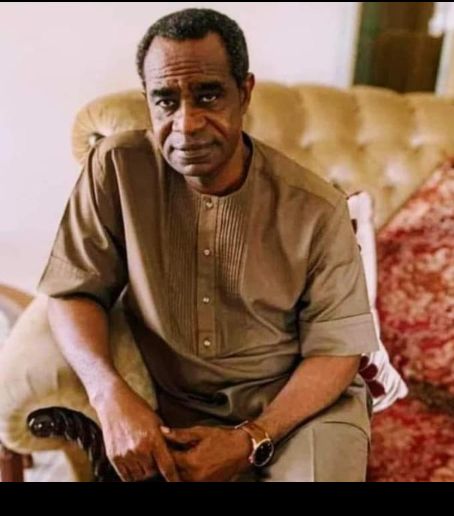
Now we get to a major turning point. In 1999, Nigeria returned to democratic rule. This was a breath of fresh air. Boni Haruna emerged as the Governor. He represented the People’s Democratic Party (PDP), a party that was sweeping the entire country. Haruna won the election on January 9, 1999, defeating his main rival, Bala Takaya of the All People’s Party (APP).
Boni Haruna’s eight years in office were a period of rebuilding. After years of military neglect, the state needed serious work. He focused on education and healthcare, trying to expand access to basic services. But he also had to deal with the fallout of the transition. The economy was shaky, and infrastructure was crumbling. You see, the 1999 election was not just about picking a leader. It was about the people finally having a say.
Haruna’s tenure was not without its critics. There were accusations of slowness and bureaucratic bottlenecks. But he managed to weather the storm and serve two full terms. That is no small feat in a state where political alliances shift like sand dunes. He laid the foundation for a stable democratic culture, even if his administration was not flashy. He proved that a civilian government could survive the transition period without being overthrown.
The Turbulent Years: Murtala Nyako and the Impeachment Saga
If there is one era that reads like a thriller, it is the era of Murtala Nyako. A retired Admiral, Nyako brought a military discipline to the office. But he also brought a stubbornness that often put him at odds with the political elite. He took office on May 29, 2007, during a period of intense political maneuvering in the country. Almost immediately, there was trouble.
Nyako’s relationship with his godfather, a powerful political figure, soured. This led to a standoff. In February 2008, he was suspended by the State House of Assembly. This forced his deputy, James Shaibu Barka, to step in as acting governor. But Nyako fought back. He went to court, challenged his suspension, and won. He was reinstated in April 2008. It was a dramatic legal battle that kept the whole country watching.
The political instability did not stop. Nyako’s second coming was marked by a constant war with the legislature. The lawmakers accused him of financial recklessness and gross misconduct. In 2014, the Assembly moved to impeach him. To avoid the humiliation of a forced removal, some reports say he resigned. Others say he was impeached. Either way, he left office on July 15, 2014. This chaos led to a revolving door of leadership.
His deputy, Ahmadu Umaru Fintiri, was sworn in as acting governor. But he was only on the seat for about three months. The political calculations changed, and Bala James Ngilari, who had been Nyako’s deputy during the latter part of his tenure, was then sworn in as the substantive governor in October 2014. Ngilari’s time was brief, but it was a crucial transitional period that kept the government from collapsing entirely. This whole episode was a masterclass in the saying: if you want to eat the toad, you must be prepared to swallow it. The power struggles were intense, and the ordinary people were left wondering when the real development would start.
Bindo Jibrilla: The APC Years (2015-2019)
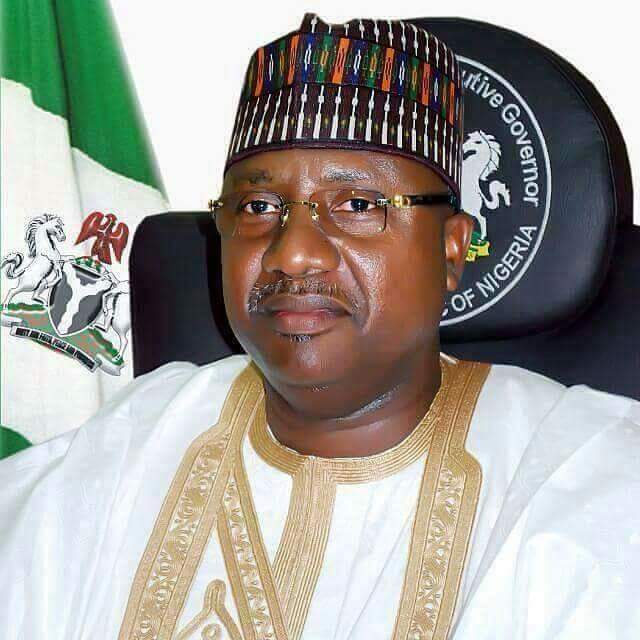
By 2015, the political wind in Nigeria had changed. The All Progressives Congress (APC) was gaining ground. Muhammadu Buhari was elected President, and the APC wave swept through many states, including Adamawa. Bindo Jibrilla, a former senator, rode this wave into the Government House. He inherited a state that was battered by the political storms of the past.
Jibrilla’s tenure was also not without its challenges. He was immediately confronted with the Boko Haram insurgency that had spilled over from the neighboring Borno State. Security became a major headache. Also, the economy was in a recession, and funds were scarce. He focused on infrastructure, trying to fix roads and improve rural access, but his administration was often criticized for a lack of visibility. It is often said that a governor is only as good as the support he gets from his party. Jibrilla had to deal with internal party squabbles, which weakened his ability to govern effectively. He served close to four years and passed the baton in 2019 in one of the most controversial elections in the state’s history.
Who Is The Governor Of Adamawa State? Brief History
That controversy brings us to the current occupant of the office. Ahmadu Umaru Fintiri, born in 1967, is the current governor of Adamawa State. He has held the position since 2019. But his path back to the office was a long, winding road that started in the legislature. Fintiri’s political career began in the Adamawa State House of Assembly, where he rose to become Speaker. This is where he honed his skills in horse trading and negotiation.
In 2014, his career took a significant turn when he became the acting governor following the impeachment of Murtala Nyako. Even though his first taste of executive power lasted only three months, it gave him the name recognition and the political network he needed for the future. In 2019, he contested the gubernatorial election under the banner of the Peoples Democratic Party (PDP). The election night was a nightmare. The initial results showed him winning, but due to a high number of canceled votes, the election was declared inconclusive.
Imagine the tension. Supporters of both parties were on edge. A supplementary election was held, and Fintiri ultimately emerged victorious. Even then, the legal battles did not stop. There were disputes that went all the way to Nigeria’s Supreme Court. In February 2024, the Supreme Court affirmed his win to confirm his Adamawa State governor position. It was the end of a long legal marathon.
Since then, Fintiri has focused on urban renewal, especially in the capital, Yola. He has been criticized by some for his massive construction projects, while others praise him for changing the face of the state capital. There is no middle ground when it comes to his administration. You either love the new roads or hate the cost of the contracts.
What Is The Name Of The Deputy Governor Of Adamawa State?
You cannot talk about the government without mentioning the number two citizen. The Deputy Governor of Adamawa State is Kaletapwa George Farauta. She is a distinguished professor and a politician, born on November 28, 1965. She has been in office since 2023, joining the Fintiri administration for his second term. Farauta is not a typical politician.
Before stepping into the political arena, she climbed the academic ladder. She served as the Vice Chancellor of Adamawa State University from 2017 to 2022. That is a significant position. It gave her the administrative experience that she now brings to the state government. Her resume also includes time as the Adamawa State Commissioner of Education and Executive Chairman of the Universal Basic Education.
Her educational journey is quite impressive. She obtained her primary and secondary education in Adamawa State before pursuing further studies. She earned her first and second degrees in Agricultural Extension from the University of Nigeria Nsukka in 1989 and 1995 respectively. She then pushed further, obtaining her PhD from Modibbo Adama Federal University of Technology, Yola. In her political career, her focus has mostly been on reforming the educational sector. She is a strong voice for female education and community development.
Why Skipping Maintenance Will Cost You
Looking at this list of governors of Adamawa State, one might wonder why some succeeded while others failed. The truth is often found in the day-to-day management of state resources. The huge challenge in Adamawa is not just building roads or schools. It is maintaining them. Every governor on this list has commissioned projects. But the status of those projects today tells a different story.
The ones that survived were the ones where the administration had a plan for upkeep. The ones that fell into disrepair were victims of a build and abandon mentality. For the next leader, the focus must be on sustainability, not just flashy groundbreaking ceremonies. A clean, functioning public school is worth more than a new monument. Do not just cut the tape and walk away.
The Role of the Traditional Institution
Anyone who studies Adamawa politics knows that the traditional institutions, especially the Lamido of Adamawa, play a huge role. The Lamido is a cultural and moral compass. He is not just a ceremonial figure. He influences public opinion, and his endorsement can make or break a political career. The governors on this list who maintained a good relationship with the traditional council often found it easier to pass policies.
This is a cultural nuance that outsiders often miss. In a state where the emirate system predates the Nigerian state, the authority of the emir is deeply respected. Furthermore, the influx of internally displaced persons (IDPs) fleeing insurgency in the Northeast has put immense pressure on the state’s resources. The current administration has had to balance the needs of the indigenes with the needs of these displaced families. It is a complicated equation that requires a lot of empathy and a very organized public distribution system.
From Military Boots to Academic Robes: A Shift in Leadership Style
There has been a distinct shift in the leadership style in Adamawa. Let us look at the numbers. The people who excelled in the early days were those with a military background or a strong connection to the federal might. But as the state matured, the electorate began to demand more cerebral leaders. The rise of Kaletapwa George Farauta is a perfect example of this. She is not a retired general. She is a professor.
This shift signals a desire for technocratic governance. People are tired of the rough-and-tumble politics of the past. They want people who understand the nuances of budget allocation and economic policy. The current governor, Fintiri, is a product of the legislative branch, which shows that the state is now rewarding experience in governance rather than just political loyalty.
Consider the change in rhetoric. The conversations have shifted from who is the toughest to who understands the numbers. That is progress, even if it is slow. The electorate is growing up, and they are holding their leaders to a higher standard.
Potential Challenges for Future Elections
Looking ahead, the future of Adamawa politics is bright, but fragile. The youth population is growing, and they are not as patient as their parents. They are demanding jobs and digital infrastructure. If the next governor does not have a clear plan for youth engagement, they will face stiff resistance. Also, the issue of religious balance is always a key consideration.
The state is almost evenly split between Christians and Muslims. Every governor has to be careful to balance appointments and development projects to avoid alienating any religious block. It is a tightrope walk, and one wrong step can lead to protests. The social media generation is watching everything, and they are not afraid to call out injustice or favoritism.
The Influence of Big Brothers and Political Godfathers
Let us not talk about politics without mentioning the shadowy figures behind the throne. In Adamawa, like in most states, political godfathers hold a lot of power. They bankroll campaigns and provide the logistics. In return, they expect favors. Sometimes, this leads to a clash between the elected governor and the godfather who sponsored him. This was a major reason for the friction during the Nyako era.
The godfather problem is a blight on the system. It undermines independent leadership. Governors who try to break free from this web often face impeachment. The next stage of political evolution in Adamawa will be the ability of the people to reject godfatherism and elect leaders who are not beholden to any small clique. It is a tough fight.
A Closer Look at Local Government Administration
A governor cannot do it alone. The state is divided into 21 Local Government Areas (LGAs). The performance of a state governor is often tied to how well the LGA chairmen perform. These chairmen are the closest to the grassroots. However, for years, the state governors have been accused of hijacking LGA funds, leaving the grassroots with no money for development.
This joint account system has been a major source of contention. Until the local governments are truly independent financially, the list of governors of Adamawa State will continue to be evaluated harshly for the lack of rural development. It is a systemic issue, not just a leadership one. The Constitution gives them autonomy, but the practice has been different.
The Economic Potential and the Need for a Vision
Adamawa State is an agricultural powerhouse. It produces groundnuts, cotton, maize, and a host of cash crops. Yet, the state is still heavily dependent on federal allocations to pay salaries. This is a paradox. The governors on this list have mostly failed to diversify the state’s economy. They have relied on the federal allocation crutch for too long.
There is a need for a governor who will look beyond the monthly revenue and think about establishing agro-processing industries. Imagine a governor who builds a cotton mill or a tomato paste factory. That would change the state’s fortunes completely. It is not impossible. It just requires courage and a long-term vision that extends beyond 4 years. The state cannot keep exporting raw materials and importing finished goods.
Infrastructure: The Urban vs. Rural Divide
Development in Adamawa has always been lopsided. Yola and Jimeta, the twin cities, usually get the lion’s share of infrastructure. The rural areas and riverine communities are often neglected. This is a common complaint from the community leaders in the hill areas of Mambilla. The geographical challenges of the state make it difficult to reach these areas. Roads are few and often inaccessible during the rainy season.
A governor who wants to be remembered must tackle the Mambilla problem. That plateau is a tourism goldmine with the potential to feed the entire nation if the road network improves. The state needs a governor who is willing to sit down in Abuja and fight for federal funding for these rural roads. Otherwise, the urban-rural gap will continue to widen, and the rural poor will remain disenfranchised.
Looking Beyond the List of Governors of Adamawa State
So, you have the dates, the names, and the parties. But history is not just data. It is a warning and a guide. The political journey of Adamawa State reflects the larger Nigerian struggle. It reflects our struggle with military interference, godfatherism, and the clash between traditional authority and modern democracy. The current leadership has its work cut out.
The state is recovering from the insurgency. The economy is squeezing the common man. The youth are looking for a way out. The next few years will determine whether the legacy of Ahmadu Fintiri will be seen as one of reconstruction or missed opportunity. For the reader, this guide should serve as a starting point for deeper engagement with the state.
Do not just memorize the names. Ask questions. Why did this governor fail? What made that one succeed? The answers will reveal the roadmap for the future. As you follow the political developments, remember that the power to choose the next leader lies in the hands of the voters. The list of governors of Adamawa State will continue to grow, but the quality of life in the state depends on the quality of choices made at the polls.
Governance is a relay race. The baton has passed from Michika to Haruna, from Nyako to Fintiri. What matters now is what the current runners do with it. The state has potential, a rich culture, and resilient people. What it lacks is consistent, visionary leadership. That is the gap that desperately needs to be filled.
The most important thing is to hold your leaders accountable. It is not enough to vote. You must engage. You must ask for the budget breakdown. You must demand performance reviews. National development starts at the state level, and the state of your local community starts with you. The list of governors of Adamawa State is not just a historical record; it is a report card of what has been achieved and what is still left on the table. Do not be a passive observer. Be a participant.
Let us keep the conversation going. Who do you think was the best leader Adamawa has had so far? Is it the disciplined Admiral, Nyako, the democratic bulldozer, Haruna, or the current city renovator, Fintiri? Your answer will tell me a lot about what you value in a leader.
Sources and Further Reading
To verify this data, you can visit the official website of the Adamawa State Government. Independent reporting from the xplorer.ng platform also offers more granular data on the electoral history, especially regarding the controversial 2019 election.