NAFDAC—short for the National Agency for Food and Drug Administration and Control—is one of Nigeria’s most visible public health institutions. In practical terms, it is the agency Nigerians look to when they ask a simple but serious question: “Is this product safe?” Its scope is broad and touches everyday life: food, medicines, cosmetics, medical devices, packaged water, chemicals, and household products that people use daily without thinking twice.
From a professional standpoint, NAFDAC’s main job is to regulate and control the manufacture, importation, exportation, distribution, advertisement, sale, and use of these regulated items in order to protect public health. That mandate is not only technical—it is also social and economic. When regulation works, it reduces the circulation of fake or harmful products, builds trust in markets, and supports legitimate manufacturers. When regulation fails, the results are costly: preventable illnesses, treatment failure, lost productivity, and weakened confidence in health systems.
To enforce standards, NAFDAC conducts inspections, tests products, and issues approvals and certifications to confirm that items offered to consumers meet accepted safety and quality requirements. But NAFDAC is not only an “inspection agency.” It is also a national system: it sets rules, monitors supply chains, collaborates with ports and borders, and coordinates with other ministries and international benchmarks in order to regulate a complex product landscape.
In this guide, you’ll learn when NAFDAC was founded and why it was created, who established it (and why there is no single “founder” in the private-company sense), and how the agency’s history reflects Nigeria’s struggle against counterfeit medicines and unsafe products. You will also get a clear explanation of the agency’s organizational structure—especially its directorates—and how its headquarters and zonal offices shape regulation across Nigeria’s diverse regions and transport corridors.
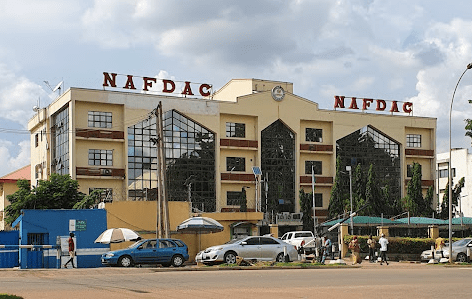
When Was NAFDAC Established In Nigeria?
NAFDAC was established in Nigeria in 1993. The agency was created to regulate and control the manufacture, importation, exportation, distribution, advertisement, sale, and use of food, drugs, cosmetics, medical devices, packaged water, chemicals, and detergents. The timing is important: the early 1990s were marked by growing global concern over counterfeit medicines and the public health risks associated with weak regulatory oversight.
In simple terms, Nigeria needed a stronger, better-resourced institution with legal authority and technical capacity to regulate products that could directly harm health if they were fake, contaminated, poorly formulated, or mislabeled. NAFDAC was designed to fill that gap.
It is also worth noting that regulation does not happen in a vacuum. Nigeria’s size, population distribution, and trade geography make product control uniquely complex. Medicines and food products move rapidly across state lines, through markets, and via both formal and informal trade networks. In that context, “establishing” NAFDAC in 1993 was not just about creating a new office; it was about building a national regulatory framework that could operate across diverse regions and supply routes.
Who Is The Founder Of NAFDAC?
NAFDAC is a government agency, not a private enterprise. That means it does not have a “founder” in the way a company does. NAFDAC was established by the Nigerian government in 1993 through Decree No. 15, later updated by Decree No. 19 in 1999. The agency operates under the Federal Ministry of Health, and its mandate is rooted in public policy and national health protection.
The agency was created to protect the health of Nigerians by ensuring the safety and quality of food, drugs, cosmetics, medical devices, bottled water, chemicals, and detergents. The main pressure behind its formation was the growing problem of counterfeit and substandard medicines in Nigeria, which had become a national emergency affecting treatment outcomes and public trust.
Although there is no single founder, NAFDAC’s identity is strongly linked to its leadership over time. The agency has had different directors-general since it began operations. One of the most notable leaders was Dr. Dora Akunyili, who served from 2001 to 2008. She was the first female to hold the position, and she played a major role in rebuilding the agency’s enforcement visibility, institutional credibility, and public engagement.
Today, the agency is headed by Dr. Mojisola Adeyeye. Like previous directors-general, she represents the continuity of institutional leadership rather than the idea of a single founder.
Important clarification: People often confuse “founder” with “most influential leader.” In NAFDAC’s case, Dr. Akunyili is widely remembered because she helped translate the agency’s legal authority into visible public action during a period when counterfeit medicines and unsafe goods were highly widespread. But institutionally, NAFDAC remains a creation of government and legislation.
What Is The History Of NAFDAC?
The National Agency for Food and Drug Administration and Control (NAFDAC) was created by the Nigerian government in 1993, during the military rule of General Sani Abacha. The creation of the agency did not happen randomly. It emerged from a crisis environment—one defined by increasing counterfeit medicines, weak product accountability, and rising public health harm linked to poorly regulated goods.
NAFDAC was set up to regulate and control the production, importation, sale, and use of food, drugs, cosmetics, medical devices, and chemicals in Nigeria. This was partly driven by global concerns about counterfeit drugs. In 1988, the World Health Assembly asked countries to help fight the growing threat of fake medicines, and Nigeria—because of its population size and market scale—was one of the places where the risks were particularly visible.
Counterfeit and unregulated drugs were causing serious health issues. By 1989, over 150 children had reportedly died because of a poorly made drug. That kind of tragedy is not only a health story; it is also a governance story. When people lose trust in what is sold as medicine, they lose trust in the entire treatment process. Worse, counterfeit drugs can create treatment failure and contribute to drug resistance—especially in infections where proper dosage and formulation are critical.
Due to the scale of the problem, some neighboring countries, such as Ghana and Sierra Leone, reportedly banned Nigerian-made drugs, foods, and beverages at different points. Whether bans were broad or targeted, the key point remains: regulatory credibility affects trade. If a country cannot prove the integrity of its product chain, it risks losing market access and reputational capital.
Before NAFDAC was created, Nigeria had an earlier body called the Directorate of Food and Drug Administration and Control. However, it was widely considered ineffective, largely because it lacked robust laws and enforcement structures strong enough to combat counterfeiting networks and widespread informal distribution systems.
NAFDAC officially became active on January 1, 1994, and it was placed under the Federal Ministry of Health. The intent was clear: protect Nigerians from harmful products through stronger regulation, better testing, and more consistent enforcement.
In 2000, the government of President Olusegun Obasanjo expressed dissatisfaction with the pace of progress in addressing fake drugs, and the management of NAFDAC was dissolved. This episode is important historically because it shows that regulatory agencies are also evaluated politically: they must demonstrate results, capacity, and public value.
In 2001, a new management team was appointed, led by Dr. Dora Akunyili as Director-General. Under her leadership, NAFDAC’s public profile grew dramatically. The agency strengthened enforcement actions and built broader public awareness about counterfeit products. During this era, NAFDAC advanced legal and operational structures, including frameworks such as the Counterfeit and Fake Drugs Act and the NAFDAC Act of 1999, which expanded the agency’s authority and improved its ability to prosecute offenders.
Dr. Akunyili also led raids on markets selling counterfeit drugs and shut down facilities producing unsafe products. NAFDAC destroyed large volumes of counterfeit drugs and expanded systems to track and trace distribution pathways—an essential move in a country where products can flow through multiple middlemen before reaching consumers.
They also banned the importation of codeine-containing cough syrups to reduce drug abuse. This step highlights another important aspect of NAFDAC’s role: regulation is not only about “fake vs original.” It is also about managing misuse, controlling high-risk substances, and ensuring that products are used within safe public health boundaries.
Since its creation, NAFDAC has continued to evolve as Nigeria’s product environment has grown more complex. Today, the agency operates in a landscape shaped by e-commerce, global supply chains, rapid logistics networks, and a large informal market sector. This makes NAFDAC’s mission both more difficult and more critical: as products move faster, regulation must become smarter, more data-driven, and more coordinated across borders and institutions.
Why NAFDAC Matters Beyond “Approval Numbers”
Many people encounter NAFDAC primarily through registration numbers printed on product packaging. While that is one element of regulation, the agency’s value is bigger. From a systems perspective, NAFDAC contributes to public health in at least five key ways:
- Pre-market control: evaluating products before they enter the market to reduce harm.
- Border and port inspection: limiting the entry of substandard imports and controlling regulated goods at points of entry.
- Market surveillance: monitoring products already in circulation and removing unsafe items.
- Enforcement and deterrence: penalizing offenders and discouraging counterfeit networks.
- Public education: building consumer awareness so people can recognize red flags and report suspicious products.
When you view NAFDAC through this wider lens, you can see why the agency’s internal structure (directorates, inspections, enforcement, legal services, public affairs, and international relations) matters. Regulation is a multi-step process that requires both laboratory science and human systems: policies, inspections, documentation, and coordinated action across Nigeria’s geography.
How Many Departments Are There In NAFDAC?
NAFDAC is led by the Director General and has a total of twenty (20) departments, which are known as directorates. This structure reflects how broad the agency’s mandate is: one directorate cannot effectively regulate everything from bottled water to narcotics to medical devices. Specialization is necessary for quality, speed, and accountability.
Director General’s Office
The Director General’s Office is led by the Chief Executive Officer, who is responsible for the day-to-day operations of the agency. Under the Director General’s Office, there are ten (10) units or programs. For clarity, the units below are rearranged into a more functional order (governance and oversight, systems and quality, public interface, investment and reform, and safety environment). All items remain the same.
- Internal Audit
- Procurement
- Quality Management System (QMS)
- Information and Communication Technology (ICT)
- Reforms
- One Stop Investment Centre (OSIC)
- WHO-Global Benchmarking Program
- NAFDAC Training and Research Institute (NT&RI)
- Public Affairs
- Health Safety and Environment (HSE) Units
From an organizational standpoint, this mix is logical: a strong regulator needs internal controls (audit, procurement), data systems (ICT), standardized processes (QMS), capacity development (training and research), and public-facing communication (public affairs). It also needs reform mechanisms and benchmarking frameworks to align national regulation with recognized global expectations.

Directorates And Departments
The twenty (20) directorates that make up NAFDAC’s organizational structure include the following. For ease of understanding, I will first explain how to interpret these directorates, and then list them exactly as required.
In expert terms, NAFDAC’s directorates fall broadly into three functional blocks:
- Product regulation and evaluation: directorates focused on food, drugs, chemicals, veterinary products, medical devices, and controlled substances.
- Compliance, inspection, and enforcement: directorates responsible for ports inspection, investigation, enforcement, and post-marketing surveillance.
- Corporate services and governance: directorates that support staffing, finance, legal services, planning, procurement, technology, and audit.
With that framework in mind, here is the complete list of the twenty (20) directorates (retained fully):
- Food Safety and Applied Nutrition Directorate
- Drug Evaluation and Research Directorate
- Narcotics and Controlled Substances Directorate
- Veterinary Medicine Directorate
- Ports Inspection Directorate
- Investigation and Enforcement Directorate
- Registration and Regulatory Affairs Directorate
- Planning, Research, and Statistics Directorate
- Chemical Evaluation and Research Directorate
- Medical Devices Directorate
- Establishment Directorate
- Finance and Accounts Directorate
- Inspectorate Directorate
- Pharmacovigilance and Post-Marketing Surveillance Directorate
- Legal Services Directorate
- Public Affairs Directorate
- International Relations Directorate
- Procurement Directorate
- Information Technology Directorate
- Internal Audit Directorate
This structure reflects the reality that regulating products is not a single activity. It is a cycle: evaluation, registration, inspection, enforcement, monitoring, and legal follow-through. The inclusion of pharmacovigilance and post-marketing surveillance is especially important because safety issues can emerge after products enter the market (for example, adverse drug reactions, contamination events, or counterfeit substitution within supply chains).
NAFDAC’s Geographic Footprint: Headquarters, Zones, and Why Location Matters
Regulation is geographic. Products move through space, and the ability to regulate depends on where enforcement and inspection capacity is located. In addition to the headquarters in Abuja, NAFDAC has six (6) zonal offices, a Lagos office, and a Federal Capital Territory (FCT) office, all headed by directors.
From a spatial governance perspective, this matters for at least four reasons:
- Ports and entry points: Nigeria’s coastal ports and border routes concentrate import flows. Lagos is especially critical because it functions as a major gateway for goods.
- Market networks: Products spread through wholesale and retail markets. Zonal offices improve response time for inspections and enforcement.
- Regional diversity: Nigeria’s zones differ in economic specialization, mobility patterns, and trade links—so regulation must adapt to different contexts.
- Data and coordination: Zonal distribution helps the agency gather localized intelligence, monitor trends, and coordinate interventions.
In real terms, having zonal offices increases NAFDAC’s ability to respond quickly to reports of harmful products, conduct localized raids, and engage local stakeholders—manufacturers, traders, health workers, and consumers. It also helps the agency manage Nigeria’s scale: a single central office cannot effectively monitor a country with this size, population density, and market complexity.
NAFDAC’s Core Responsibilities (What the Agency Actually Does Daily)
Many people understand NAFDAC in a general way (“they approve food and drugs”), but the day-to-day work is more detailed. Here are core operational responsibilities, stated in practical terms:
- Product evaluation: reviewing formulations, labelling, and documentation to ensure compliance with safety standards.
- Laboratory testing: analyzing products to confirm identity, quality, dosage accuracy, and contamination levels.
- Facility inspection: checking factories, warehouses, and distribution sites to ensure proper production and handling conditions.
- Port inspections: assessing imported products to prevent entry of unsafe or counterfeit items.
- Market surveillance: monitoring products already in circulation and taking action where necessary.
- Public alerts and education: warning consumers about unsafe products and encouraging reporting.
- Enforcement: investigating violations, conducting raids, seizing illegal products, and supporting prosecution through legal services.
In many ways, NAFDAC functions like a national “quality gatekeeper” for products that can harm health if poorly made or illegally distributed. It sits at the intersection of science (testing), law (enforcement), and commerce (markets).
Common Misunderstandings About NAFDAC (Clarified)
Because the agency is highly visible, it also attracts misconceptions. Here are a few common misunderstandings—and the expert clarification:
- “If a product has a number, it must be safe.” A number is not the full story. Consumers should still watch for altered packaging, suspicious pricing, and inconsistent product quality.
- “NAFDAC only cares about drugs.” The mandate includes food, cosmetics, chemicals, bottled water, medical devices, and more.
- “NAFDAC can stop all fake products instantly.” Counterfeiting is a networked problem tied to markets and supply chains. Regulation reduces risk, but it requires public cooperation, industry compliance, and enforcement capacity.
- “No single leader matters.” Leadership matters significantly in institutional performance, even though the agency is created by government. Strategic leadership influences enforcement intensity, partnerships, internal systems, and public trust.
These clarifications don’t reduce NAFDAC’s importance; they help people understand how regulation works in complex, real-world market environments.
Conclusion
NAFDAC is a Nigerian government agency established in 1993 to regulate and control products that directly affect health and safety—food, drugs, cosmetics, medical devices, packaged water, chemicals, and detergents. It was created by the Nigerian government through legal decrees and placed under the Federal Ministry of Health to protect Nigerians from harmful and counterfeit products.
Its history reflects Nigeria’s struggle with counterfeit medicines and unsafe products, including international concern over fake drugs and tragic outcomes linked to poor-quality pharmaceuticals. Over time, NAFDAC strengthened its enforcement and regulatory capacity, especially under notable leadership such as Dr. Dora Akunyili, and continues its work today under current leadership.
Organizationally, NAFDAC is led by the Director-General and operates through twenty directorates supported by internal units. Geographically, it maintains headquarters in Abuja and operates across the country through zonal offices, a Lagos office, and an FCT office—an arrangement that supports regulation across Nigeria’s major trade routes and market systems.
Ultimately, NAFDAC’s role is not just administrative. It is public health protection in action: ensuring that what people eat, drink, apply, or take as medicine meets standards that reduce harm and build trust. Understanding NAFDAC’s establishment, history, and structure helps citizens, businesses, and researchers engage with the agency more intelligently—and encourages a healthier, safer product environment for everyone.