This article provides a complete list of the current Senators representing Ekiti State in Nigeria. It includes details about their political party, constituency, and the start of their term. I will also explain—through the lens of an expert geographer—why senatorial representation matters for Ekiti’s development and how the state’s physical and human geography shapes the policy priorities that often reach the floor of the National Assembly.
So, if you’re interested in learning more about the people shaping the laws and policies that impact Ekiti State, this is a practical place to begin. But beyond names and party labels, we will connect representation to place: to roads that determine access to markets, to watersheds that influence flooding and water supply, to the location of schools and health facilities, and to the everyday spatial inequalities that determine who benefits from development and who remains underserved.
Ekiti is often described as a largely upland, Yoruba-speaking state with a strong culture of education and a settlement pattern dominated by small and medium-sized towns. Yet that familiar description hides important geographic details: a rugged relief in many areas; a dense network of rural roads that are economically vital but often under-maintained; erosion-prone slopes and valley bottoms that flood during heavy rains; and an economy where public service, education, trade, and agriculture remain central. These realities create specific expectations for lawmakers—especially Senators, who are positioned to influence national budgets, federal infrastructure priorities, and policies that touch land, livelihoods, and security.
In Nigeria, each state is represented in the Senate by three Senators—one per senatorial district. For Ekiti State, those districts are Ekiti North, Ekiti Central, and Ekiti South. While they are political units, they also function as geographic units: each district groups together local government areas that share certain development characteristics, transport corridors, and social networks.
To make this guide easy to follow, I will first present a clean table of the current Senators and then provide a detailed profile for each one. I will also add district-level context—because representation is never “one-size-fits-all.” The needs of a relatively more urbanized corridor differ from those of a more rural, dispersed settlement landscape; likewise, a community near a major route experiences different pressures than one located deeper in the interior where access can be more difficult.
List Of Current Senators Representing Ekiti State
Before the table, it helps to clarify what “current Senator” means here. This list reflects Senators serving in the 10th Senate era (inaugurated in 2023), alongside any Senator whose term began earlier but continues into the present. In practical civic terms, these are the three individuals who presently carry Ekiti’s senatorial voice in Abuja—debating national bills, participating in committee work, and performing oversight on federal agencies whose projects and programs may affect Ekiti communities.
As a geographer, I also want to highlight an often-missed point: Ekiti’s development is shaped as much by “networks” as by “boundaries.” The state’s towns and villages are connected by mobility—roads, transport fares, travel times, and the location of services. Therefore, when we talk about what Senators can influence, we are essentially talking about how they can strengthen or weaken these networks: federal roads that reduce travel time; education and skills programs that improve human capital; agriculture and rural development interventions that raise incomes; and security and justice policies that protect daily life.
| Name | Constituency | Term | Gender | Party |
|---|---|---|---|---|
| Olusegun Cyril Oluwole Fasuyi | Ekiti North | 2023 – Present | Male | APC |
| Michael Opeyemi Bamidele | Ekiti Central | 2019 – Present | Male | APC |
| Adaramodu Adeyemi Raphael | Ekiti South | 2023 – Present | Male | APC |
Understanding Ekiti’s Senatorial Districts Through Geography
To appreciate what each Senator represents, it is useful to understand Ekiti not only as a political map but as a lived landscape. Ekiti is part of Nigeria’s South-West geopolitical region. Its terrain is dominated by undulating hills and rocky outcrops, which influence settlement location, road construction costs, drainage patterns, and in some places, erosion risks. The climate is tropical with a distinct rainy season, and rainfall intensity can be high—meaning drainage quality is not optional. When drains fail, roads fail; when roads fail, market access, school attendance, and healthcare visits are disrupted.
Ekiti’s settlement pattern has long been characterized by a large number of towns and communities with deep cultural histories, strong social associations, and intense inter-town mobility. People frequently travel for education, trading, civil service, ceremonies, and religious gatherings. This constant movement means that infrastructure—especially roads, transport safety, and communications—has outsized importance.
Ekiti also has a strong education identity. Many households invest heavily in schooling, and the state’s development aspirations often center on human capital: producing skilled graduates, strengthening health services, supporting youth entrepreneurship, and building a competitive economy. Yet education is also geographic: it depends on where schools are located, how far students must travel, the quality of rural roads, and whether teachers can be retained in more remote communities.
With these basics in mind, the three senatorial districts can be read as three development spaces—each with overlapping needs but different emphases.
Ekiti North: connectivity, agriculture, and dispersed settlements
Ekiti North includes communities that are strongly connected to agriculture, local commerce, and inter-state movement across the broader South-West. In many parts of this district, settlements can be relatively dispersed, with travel between towns shaped by road condition and seasonal weather. When rural roads are weak, farmers face higher costs moving produce, and post-harvest losses increase. In geographic terms, poor roads shrink the “effective market area” of farming communities—meaning farmers cannot profitably reach larger markets even if those markets are not very far in straight-line distance.
Therefore, constituents in Ekiti North often view federal attention through tangible improvements: road rehabilitation, rural electrification, improved security along transport routes, water supply projects, and education support that strengthens schools serving widely distributed communities.
Ekiti Central: administrative gravity and urban-service pressures
Ekiti Central includes areas that feel the pull of the state capital and other major administrative and service nodes. Where administrative and commercial activities concentrate, so do urban planning pressures: traffic congestion, waste management needs, housing costs, land disputes, and demand for jobs. Urbanization changes the geography of public need. A town that grows rapidly can outpace the capacity of its drainage, water systems, and sanitation infrastructure—leading to flooding and public health risks during the rainy season.
Ekiti Central also serves as a corridor where political influence can translate into institutional opportunities—such as federal projects, educational investments, and policy-driven programs. People here often pay close attention to national legislative leadership positions because those positions can influence what issues get prioritized and how effectively a Senator can lobby for district and state interests.
Ekiti South: trade links, rural development, and environmental pressures
Ekiti South includes communities with strong town-based identities and extensive rural hinterlands. Like other parts of Ekiti, it relies on agriculture, trade, and mobility networks that link communities internally and to neighboring states. Environmental pressures such as erosion, drainage challenges, and seasonal flooding can affect roads and farms. For many households, the key development question is practical: can you move goods and people safely and affordably between towns, farms, markets, clinics, and schools?
Across Ekiti’s districts, one theme remains constant: development is a geography of access. Roads, electricity, water, security, and functional public institutions are what reduce the penalties of distance and improve quality of life.
What Senators Do—and Why It Matters for Ekiti
In theory, a Senator’s job is legislative: debate and pass laws, approve budgets, and provide oversight of the executive branch. In practice, Nigerians also expect Senators to serve as advocates for their districts—pressing federal agencies to implement projects, drawing attention to urgent local issues, and supporting solutions that have visible impact.
From a geographer’s perspective, senatorial influence can be understood through four “spatial pathways”:
- Infrastructure pathway: Federal roads, bridges, and public buildings reshape movement and access across towns and rural areas.
- Services pathway: Investments in health, education, and water supply determine how far people travel for essential needs.
- Economic pathway: Policies affecting agriculture, trade, small business finance, and job creation influence migration and settlement stability.
- Safety pathway: Security and justice policies affect the freedom to farm, trade, commute, and invest.
When citizens ask, “What has my Senator done?” they are often asking how strongly that Senator has influenced these pathways. The next sections profile Ekiti’s current Senators and connect their roles to the geographic realities of their districts.
1. Olusegun Cyril Oluwole Fasuyi
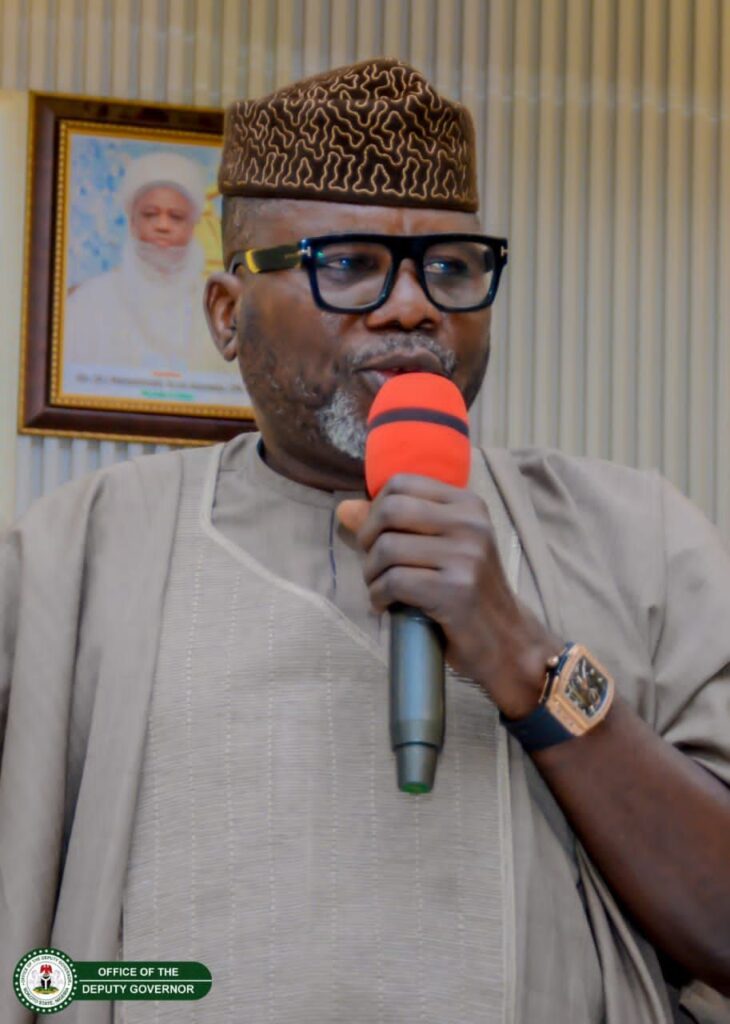
One of the current Senators representing Ekiti State is Olusegun Cyril Oluwole Fasuyi. Senator Fasuyi, a member of the All Progressives Congress (APC), is serving his first term as Senator for Ekiti North Senatorial District in the 10th Senate. His entry into the Senate in 2023 places him among the legislators expected to bring new energy to district representation while learning the procedural demands of national lawmaking.
He was born on July 11, 1965. Before becoming a Senator, he held the position of Managing Director and Chief Executive Officer at Legacy Foods Limited. That private-sector experience is worth noting because economic development in Ekiti is tightly linked to how value chains operate: how farm produce is processed, stored, packaged, and transported to markets. While not every business background automatically produces policy success, private-sector exposure can shape how a lawmaker thinks about investment climate, job creation, and the infrastructure needed for local industries to grow.
Senator Fasuyi’s highest educational qualification is a Bachelor of Science (BSc) degree. In a state where education is culturally valued, many constituents watch closely to see how their representatives support schools, vocational training, and youth development. Yet education is also more than a social good—it is a spatial equalizer. When education access expands into rural areas, it reduces the need for families to relocate to larger towns purely for schooling, and it supports balanced development across the district.
As Senator for Ekiti North, Fasuyi’s tenure provides an opportunity to address district priorities that are strongly geographic in character. Ekiti North includes communities where livelihoods depend on agriculture and on the ability to move goods through a network of roads that can be vulnerable to seasonal damage. In such settings, “infrastructural development” is not a slogan; it determines whether farmers can reach markets during the rainy season, whether ambulances can move quickly during emergencies, and whether students can commute safely to school.
Healthcare is another area where geography is decisive. The quality of healthcare in a district is not measured only by the number of facilities, but by their distribution and accessibility. A clinic located far from rural settlements might exist on paper yet remain practically out of reach for many households, especially where transport costs are high. Senators can influence this space through oversight—ensuring federal health programs reach the intended communities—and through advocacy that directs attention to underserved pockets.
Youth empowerment, often mentioned in political messaging, also has a clear geographic dimension in Ekiti North. When young people find limited opportunity in small towns, migration becomes a dominant strategy—toward larger South-West cities and beyond. Migration can be positive, but distress migration—driven by lack of jobs—can weaken local economies and increase vulnerability. Policies that support agribusiness, small-scale manufacturing, digital skills, and credit access can help young people build livelihoods without having to leave their communities entirely.
Through legislative actions and advocacy, Senator Fasuyi aims to contribute to improving the quality of life for residents of his constituency and promoting the overall progress of Ekiti State. From a geographer’s view, the most durable progress will come from interventions that reduce the “friction of distance”—better roads, reliable electricity, safer transport, water supply stability, and social services distributed in ways that match settlement patterns rather than forcing rural residents to travel excessively for basic needs.
In evaluating the impact of a first-term Senator like Fasuyi, it is helpful to watch for three kinds of outcomes:
- Institutional outcomes: committee participation, bill sponsorship, and oversight actions that strengthen governance.
- Spatial outcomes: improvements in roads, water projects, electrification, and school or clinic upgrades that are visible across multiple communities.
- Network outcomes: partnerships that link Ekiti North to federal agencies, private investors, or skill-development programs that can scale local opportunity.
These outcomes take time, and they require both technical engagement in Abuja and consistent listening across the district’s towns and rural areas.
2. Michael Opeyemi Bamidele
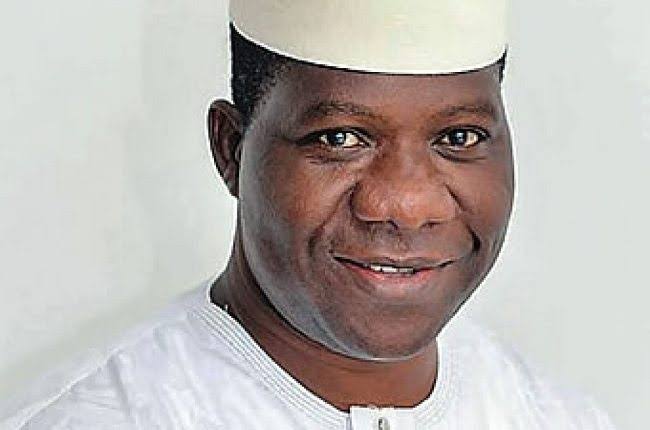
Michael Opeyemi Bamidele—commonly known as MOB—is a Nigerian lawyer, human rights activist, and politician who has represented Ekiti Central senatorial district in the Senate since 2019. In 2023, he became the Majority Leader of the Nigerian Senate, a leadership position that can shape legislative scheduling, negotiation, and the overall effectiveness of the governing coalition in pursuing its agenda.
From the standpoint of political geography, Senate leadership positions matter because they influence “access to institutional power.” A Senator who occupies a top leadership role often gains greater visibility and stronger bargaining capacity when advocating for constituency needs. This does not automatically guarantee development outcomes, but it increases the ability to place issues on national agendas and to influence the distribution of attention—a scarce resource in a country as large and complex as Nigeria.
Bamidele was born on July 29, 1963, in Iyin Ekiti, Ekiti State. His education includes attendance at Baptist Academy and later Obafemi Awolowo University for a bachelor’s degree in religious studies. He also earned a bachelor’s degree in law from the University of Benin and was called to the Nigerian Bar in 1992. He furthered his education at Franklin Pierce University with a master’s degree in law and was admitted to the New York Bar in January 1999.
Education and legal training are relevant here not as credentials alone, but because legislative work is heavily shaped by interpretation: interpreting constitutional provisions, drafting bills, negotiating language, and scrutinizing executive actions. A Senator with strong legal experience may be particularly engaged in debates around rights, governance reform, and institutional accountability—areas that matter for Ekiti because stable institutions help create a predictable environment for business, investment, and public service delivery.
Bamidele’s political trajectory includes early participation in party primaries for the Federal House of Representatives in 1992 under the Social Democratic Party, though he did not win that contest. He later served as a special assistant on legal matters to Senator Bola Tinubu until 1993. Over time, he held various roles in Lagos State, including Senior Special Assistant on political and intergovernmental relations, Commissioner for Youth, Sports, and Social Development, and Commissioner for Information and Strategy.
Why do Lagos roles matter for an Ekiti Senator? Because Lagos is Nigeria’s most complex urban system, and public administration experience there can expose policymakers to high-density planning issues—transport coordination, information management, social program delivery, and the politics of governing large, diverse populations. While Ekiti is not Lagos in size, it is increasingly influenced by the South-West urban network. Many Ekiti residents live, work, or study in other states, and remittances and mobility patterns link Ekiti’s economy to broader regional systems. A Senator who understands intergovernmental relations and urban governance may be better positioned to navigate federal-state coordination on key projects.
Bamidele was elected as a member of the 7th National Assembly in April 2011, representing Ekiti Central Federal Constituency 1, and later became Senator for Ekiti Central in 2019. As of July 4, 2023, he assumed the position of Senate Majority Leader, succeeding Abdullahi Ibrahim Gobir. In the Senate, leadership requires coalition management, negotiation, and agenda coordination. These are skills that can also influence how effectively a Senator can champion state priorities in budgetary and policy debates.
Ekiti Central has a development profile where urban-service pressures and administrative functions are prominent. This means the constituency often cares about:
- Urban infrastructure: road maintenance, traffic management, drainage expansion, and public-space improvement.
- Public institutions: strengthening federal and state facilities that attract jobs and services, including educational and health institutions.
- Economic linkages: making it easier for businesses to operate through stable electricity, better roads, and regulatory clarity.
- Youth employment and skills: connecting graduates and apprentices to realistic job pathways within and outside the state.
But beyond these general categories, Ekiti Central also illustrates a wider geographic tension in Nigeria: the pull toward bigger cities. Ekiti’s educated youth often migrate toward regional economic centers. One way a Senator can respond is by promoting policies that make mid-sized towns more economically viable—supporting digital infrastructure, educational quality, and small enterprise financing that allows local economies to absorb talent.
As a Senate Majority Leader, Bamidele’s influence extends beyond Ekiti to national legislative coordination. Yet the Ekiti public naturally evaluates him through a local lens: does his national position translate into attention for Ekiti’s roads, schools, water systems, and public institutions? In geography, we call this the “scale problem”: action at the national scale must eventually generate outcomes at the local scale. The more effectively a leader bridges scales, the more durable the impact.
For citizens tracking senatorial performance, it is also useful to understand that leadership roles can reduce time available for constant constituency presence. Senate leadership is demanding. Therefore, the strongest models of representation usually combine national effectiveness (committee and leadership work) with robust local engagement structures—constituency offices that gather community feedback, regular consultations with professional groups and traditional institutions, and strategic advocacy for projects that solve geographic bottlenecks such as bad road segments, recurrent flood points, and underserved service areas.
3. Adaramodu Adeyemi Raphael
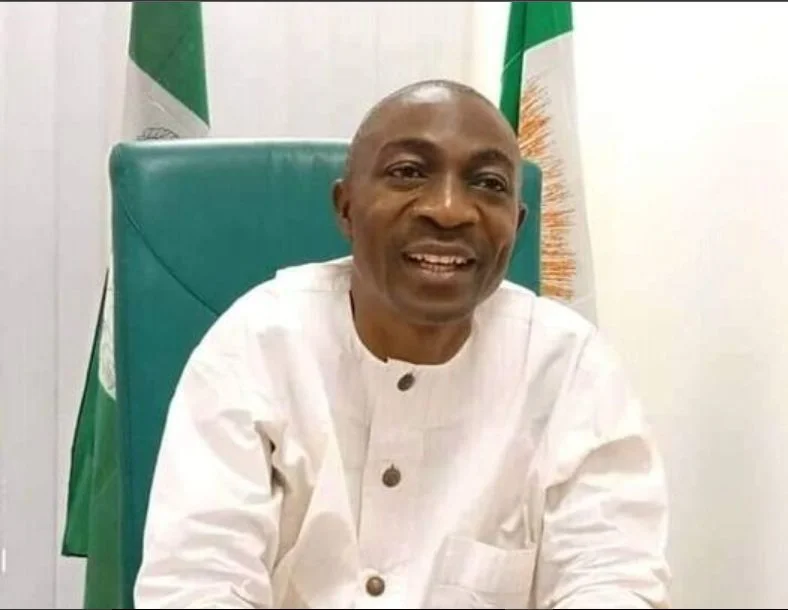
Adaramodu Adeyemi Raphael—often referred to as Yemi Adaramodu—serves as the Senator for Ekiti South, having assumed office on June 13, 2023. He represents the All Progressives Congress (APC) in the 10th Senate. His emergence as Senator in 2023 marks a shift in Ekiti South’s senatorial representation and places him at the center of district-level expectations related to infrastructure, livelihoods, and social services.
Adaramodu’s political journey, as described in your source text, includes service as chief of staff to the governor of Ekiti State before he was elected to the Federal House of Representatives. In many Nigerian states, the chief-of-staff role provides a close view of governance: how budgets are negotiated, how projects are coordinated, how stakeholder demands are managed, and how state-federal relationships work in practice. From an institutional geography standpoint, this is valuable experience because development delivery often depends less on announcements and more on coordination across agencies and levels of government.
During his tenure in the House of Representatives, he chaired the Committee on Youth Development. Youth development is not a narrow social portfolio in a place like Ekiti; it is tied to migration, skills, and the survival of local economies. When young people do not find opportunity locally, communities can experience a “brain drain” of energetic labor and entrepreneurial talent. Conversely, when youth programs are linked to real economic pathways—agro-processing, building trades, digital services, education innovation—town economies become more resilient.
In the Senate election held on February 25, 2023, Adaramodu contested for the Ekiti South Senatorial District against the incumbent, Abiodun Olujimi of the People’s Democratic Party (PDP). According to the figures in the provided text, he won with 63,189 votes, while Olujimi recorded 36,191 votes. Elections are complex events influenced by multiple factors: party organization, candidate popularity, campaign effectiveness, and broader political dynamics. The key geographic takeaway is that Adaramodu secured enough spatial spread of support across Ekiti South communities to win decisively.
Ekiti South’s development priorities are strongly tied to mobility and service distribution. Many communities depend on rural roads connecting farms to town markets, and on inter-town links that support education, health access, and trade. In geographic planning, these are “lifeline networks.” When a road segment collapses, the effects are not limited to transport inconvenience; they include higher food prices, reduced school attendance, delayed medical care, and weaker local commerce.
Environmental management also matters. In parts of Ekiti, intense rainfall and slope conditions can drive erosion and damage road shoulders, culverts, and drainage channels. When drainage is poor, flooding can disrupt neighborhoods and accelerate infrastructure decay. Therefore, district advocacy often focuses on drainage upgrades, gully erosion control, and road maintenance systems that are proactive rather than reactive.
As Senator for Ekiti South, Adaramodu’s performance will likely be evaluated through both legislative visibility and practical constituency outcomes. Constituents often look for:
- Infrastructure advocacy: roads, bridges, and erosion-control interventions in high-need corridors.
- Human development support: initiatives that strengthen schools, vocational training, and healthcare access.
- Youth opportunity programs: skills and employment pathways that reduce distress migration.
- Institutional coordination: effective engagement with federal agencies whose projects affect Ekiti South communities.
For a state like Ekiti—where the economy is deeply tied to the strength of human capital—the most meaningful district wins often involve creating opportunities that keep communities stable: better access, safer mobility, and services that reduce household vulnerability.
Ekiti’s Key Development Issues That Senators Commonly Influence
To make this resource more useful than a simple list, it helps to map Ekiti’s common policy needs. These needs are shaped by geography and therefore tend to remain visible across election cycles—even when political leadership changes. Below are major themes where Senators frequently matter, either directly through legislation or indirectly through budget influence and oversight.
1) Roads, transport costs, and the “distance penalty”
Ekiti’s towns are connected by an extensive road network, much of it consisting of state and local routes that link farms and smaller towns to larger markets. When roads are poor, transport fares rise, food prices rise, and household budgets tighten. The “distance penalty” is a core concept in geography: distance is not just kilometers; it is time, cost, and risk. A 30-kilometer trip on a bad road can feel like 100 kilometers in economic and social terms.
Senators can influence road outcomes by supporting federal road budgets, pushing for rehabilitation of federal routes that affect Ekiti, and conducting oversight to ensure contractors deliver quality work. While a Senator does not control state road agencies, the federal level still matters because many strategic routes and major funding decisions flow through national systems.
2) Education and skills as a spatial equalizer
Ekiti’s identity is strongly linked to education. Yet educational opportunity is uneven: schools in more accessible towns often have better facilities and staffing than those in more remote settlements. This is a classic “core–periphery” pattern. When education quality concentrates in the core, the periphery experiences out-migration and long-term disadvantage.
Senators can support education through policy debates, budget influence for federal institutions, scholarship advocacy, and interventions that expand skills training. Skill-based education is especially important for youth who may not enter formal university pathways but can build strong livelihoods through trades, technology, and agribusiness.
3) Health access, facility distribution, and rural vulnerability
Health outcomes are spatial. In many Nigerian states, maternal and emergency healthcare is strongly affected by distance to clinics, road condition, and transport availability. For Ekiti, improving rural health access reduces preventable deaths and improves economic stability for households. Senators can influence health budgets, advocate for the upgrade of federal health programs, and pressure agencies to improve service distribution.
4) Water, drainage, and seasonal risk
Ekiti’s rainy season can be intense, and where drainage is weak, roads flood and neighborhoods face waterlogging. Poor drainage also worsens erosion and accelerates road decay. Water supply is another issue: reliable, safe water reduces disease and supports hygiene. Senators can push for stronger water-resource investment and climate adaptation funding—especially where communities face repeated seasonal damage.
5) Agriculture beyond farming: storage, processing, and markets
While agriculture is important across Ekiti, the biggest economic gains often come from value addition—processing, packaging, storage, and efficient market access. Poor storage increases losses; weak market access reduces profit. Senators can support national policies that expand rural credit, strengthen extension services, and encourage agro-processing investment that creates jobs close to where crops are produced.
6) Security and safe mobility
In development geography, security is a mobility issue. When people fear travel, markets shrink, investment slows, and social life contracts. While policing is not controlled by Senators, national security frameworks, budgets, and oversight influence the effectiveness of institutions that protect citizens. For a state with active inter-town movement like Ekiti, safe mobility is central to economic and social health.
How to Use This List as a Citizen (A Practical Guide)
Knowing who your Senators are is only step one. The next step is understanding how to engage meaningfully. Here are practical, geography-informed ways to make this information useful:
- Track issues by location: identify the worst road segments, flood points, and underserved service areas in your community and document them clearly.
- Engage through organized networks: town unions, professional groups, student associations, and market groups often have more influence than individuals acting alone.
- Ask for measurable outcomes: rather than general promises, ask about specific bills, oversight actions, and budget advocacy tied to clearly identified projects.
- Think in systems: if flooding is the issue, ask not only for “cleanup” but for drainage redesign, culvert upgrades, and maintenance schedules.
- Use public hearings and consultations: national policy discussions sometimes include public input opportunities. Community voices matter most when they are organized and evidence-based.
In other words, representation becomes more effective when citizens provide clear geographic information: where the problem is, who it affects, how often it happens, and what kind of intervention would solve it sustainably.
Conclusion: Ekiti’s Senators and the Geography of Development
Ekiti State’s current Senators—Olusegun Cyril Oluwole Fasuyi (Ekiti North), Michael Opeyemi Bamidele (Ekiti Central), and Adaramodu Adeyemi Raphael (Ekiti South)—represent three districts that share many statewide priorities but experience them in different ways. Their effectiveness is not only a matter of political debate; it is a matter of how national policy translates into local improvements across towns, villages, farms, and transport corridors.
As an expert geographer, I return to a simple principle: development is visible on the ground. You can see it in travel times, in the condition of drains during heavy rain, in whether students can reach school safely, in whether farmers can move produce without losses, and in whether households can access healthcare without extreme cost. Senators influence these outcomes through legislation, oversight, and advocacy—especially when they understand that policy is ultimately about people in places.
If you want to stay informed, revisit this list periodically, follow Senate updates, and track how district priorities are represented in national debates. In a federal system, informed citizens strengthen accountability—and accountability is one of the most powerful tools for turning political representation into real development progress.