This guide comprehensively lists the current Senators representing Benue State in Nigeria. It looks at each Senator’s name, position, constituency, political party, and year they assumed office. I also interpret their roles through the lens of geography—because in a state like Benue, representation is deeply tied to land, livelihoods, rivers, roads, and the spatial distribution of opportunity and risk.
Benue’s three senatorial districts are more than political lines on a map. They reflect settlement patterns, cultural landscapes, and development needs that differ from one zone to another: riverine floodplains versus upland farming belts; market towns and transport corridors versus rural communities with thin infrastructure. Understanding these geographic realities makes it easier to understand what constituents often expect from their Senators—and why legislative priorities in Abuja frequently echo local environmental and economic conditions back home.
For clarity, this article focuses on the 10th Senate era (inaugurated in 2023) and highlights the three serving Senators for Benue State. Where helpful, I explain how each district’s physical and human geography shapes common policy concerns such as agriculture, security, road connectivity, flood management, education access, and public services.
List Of Current Senators Representing Benue State
Benue State, like every Nigerian state, is represented in the Senate by three Senators—one from each senatorial district. These districts are often referred to locally as Zones A, B, and C. While the labels are political, the underlying differences are geographic: they correspond to clusters of local government areas with shared histories, economic systems, and spatial challenges.
Before the table, a quick geographic orientation is useful:
- Benue North-East (Zone A) is commonly associated with parts of the eastern and north-eastern belt of the state, with strong agricultural activity and communities linked by regional markets and inter-state corridors.
- Benue North-West (Zone B) includes key urban and peri-urban spaces and important transport links, with Makurdi—Benue’s capital—sitting within this broader zone of administrative and economic gravity.
- Benue South (Zone C) is widely associated with the Idoma-speaking areas and river-influenced landscapes, with farming, trade, and seasonal environmental pressures shaping community life.
These broad descriptions do not replace official electoral boundaries, but they help readers understand why the concerns raised by each district can differ even within the same state.
| Name | Constituency | Party | Years in Office |
|---|---|---|---|
| Tartenger Titus Zam | Benue North West | APC | 2023 – now |
| Udende Memsa Emmanuel | Benue North East | APC | 2023 – now |
| Abba Patrick Moro | Benue South | PDP | 2019 – now |
Why Benue’s Senators Matter (A Geographer’s View)
It is easy to think of Senators mainly as lawmakers who debate bills and vote in the National Assembly. That is correct—but it is incomplete. Senators also help shape how national resources, institutions, and policies reach places. In geographic terms, they influence how “Abuja decisions” translate into real-world outcomes across Benue’s towns, villages, farms, and riverbanks.
In Benue State, this link between politics and geography is especially visible because the state’s identity is strongly tied to land and agriculture. Benue is often called the “Food Basket of the Nation,” a label that points to the state’s productive soils and farming systems. Yet food production is not just about soil fertility. It depends on roads that move produce to markets, security that allows farmers to access fields, storage infrastructure that reduces post-harvest losses, and water management that limits flood damage. Each of these issues has a legislative dimension—budgets, oversight, policy, and federal partnerships.
Benue’s position along the River Benue and its tributaries also brings seasonal flooding risks, particularly in low-lying and river-adjacent communities. Flooding is a classic geographic hazard: it is shaped by rainfall patterns, land cover, drainage capacity, settlement location, and upstream land use. When floods occur, they affect schools, clinics, roads, and farms—forcing displacement and disrupting local economies. Senators, through national planning and oversight, can advocate for stronger flood-control measures, disaster response support, and climate-adaptation financing.
Finally, the state has faced repeated security and communal challenges that are often tied to resource competition and mobility—who can access land, pasture, water, and safe transport corridors. These are not purely local issues; they intersect with national security policy, policing, justice systems, and humanitarian relief structures.
With that context established, let’s look at the three Senators and what their roles mean within Benue’s political geography.
1. Tartenger Titus Zam
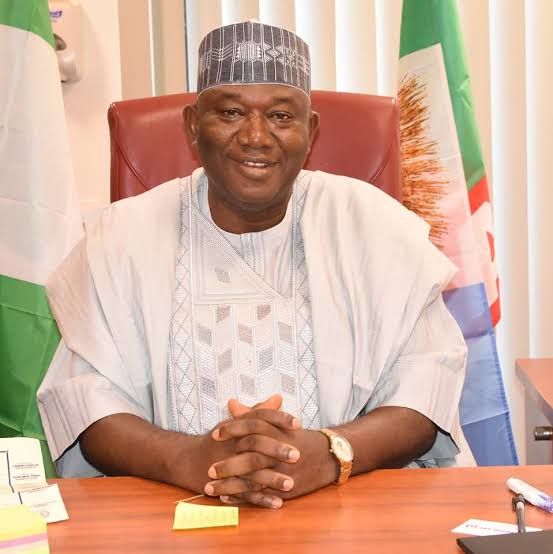
Tartenger Titus Zam is a Nigerian politician serving as Senator for Benue North-West Senatorial District. He assumed office after winning the senatorial election and taking his seat in the 10th Senate (2023–present). In practical terms, this means he represents communities that include important administrative, market, and transport spaces within Benue’s broader landscape.
From a geographic perspective, Benue North-West (often linked with Zone B in popular classification) contains strategic corridors—routes that connect the state capital region to other parts of Nigeria. When transport corridors function well, they reduce the “cost of distance” for farmers and traders. When they fail—due to poor road conditions, insecurity, or flooding—local economies slow down. Senators from such zones often face strong public pressure to advocate for roads, bridges, and federal infrastructure that keeps the regional economy connected.
On August 8, 2023, Titus Zam was appointed as the chairman of the Senate Committee on Rules and Business for the 10th Senate. This position is not a constituency-specific role; it is an institution-building role inside the Senate itself. The committee is central to how the Senate organizes its legislative agenda—how debates are scheduled, how procedures are followed, and how the Senate’s internal order supports lawmaking and oversight.
In governance geography, institutions are as important as infrastructure. Strong rules and predictable processes shape how efficiently a country can respond to national challenges—whether those challenges involve flooding disasters, agricultural investment, public health emergencies, or security disruptions. A Senate that functions with clear procedure is more likely to scrutinize budgets effectively and demand accountability from agencies that operate in places like Benue.
As a senator, Titus Zam participates in national debates on laws, budgets, and oversight. But he is also expected—like many Senators in Nigeria—to act as a bridge between federal systems and local needs: advocating for projects, monitoring federal agencies operating within the state, and ensuring that national programs do not remain concentrated only in a few major cities outside Benue.
Several geographic concerns often arise in the North-West district context:
- Urban growth management: areas linked to the state capital experience housing pressure, informal settlement expansion, and sanitation challenges that require planning, not just ad-hoc interventions.
- Transport and market connectivity: farm-to-market roads, inter-state highways, and bridge maintenance directly affect food supply chains and price stability.
- Flood and drainage control: when rivers and seasonal runoff overwhelm drains, roads and neighborhoods become vulnerable—especially where land-use planning is weak.
- Security along corridors: safe movement is essential for trade, schooling, and healthcare access, particularly where communities depend on weekly markets and inter-LGA travel.
Ultimately, Senator Zam’s significance lies in both his constituency representation and his Senate-institution role. One is local and place-based; the other is procedural and national. Together, they shape how effectively Benue North-West can translate needs into legislative action.
2. Udende Memsa Emmanuel
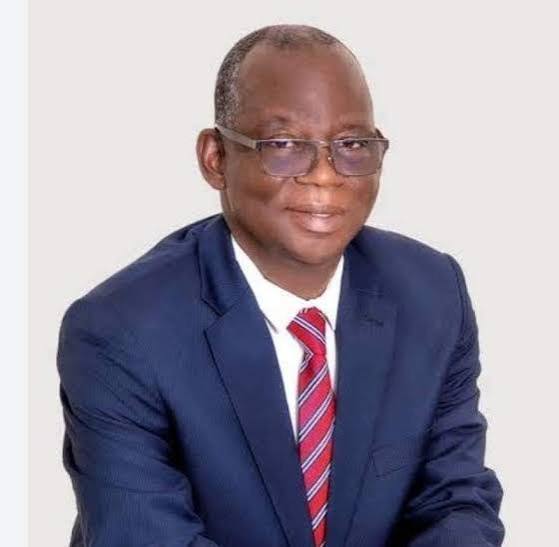
Senator Udende Memsa Emmanuel currently represents Benue North-East Senatorial District (often referred to as Zone A in local political language). He emerged victorious in the February 25, 2023, National Assembly elections, defeating the incumbent senator and former governor of Benue State, Gabriel Suswam. Whatever one’s partisan interpretation of that election, it was a major political shift, because incumbency in Nigeria often comes with strong networks and visibility.
To interpret his political path clearly, it helps to think in terms of political geography: representation is frequently built over time through networks—community ties, local party structures, and the “service footprint” a politician leaves across towns and villages. Udende’s earlier political experience includes his election to the Federal House of Representatives in 2011, representing the Ukum/Katsina-Ala/Logo Federal Constituency under the platform of the People’s Democratic Party (PDP). He was re-elected in 2015, later switched to the APC in 2016, and continued his political pursuit even after an electoral setback in 2019.
From a geographer’s viewpoint, the North-East district sits within a landscape where agriculture, mobility, and security concerns often intersect. Many communities depend on farming, local markets, and seasonal movement patterns. When insecurity rises or roads deteriorate, the region’s economic geography becomes constrained: farmers reduce field access, traders change routes, and families may relocate toward perceived safer towns—altering settlement density and service demand.
The article you provided includes detailed vote figures from party primaries and the general election. Vote numbers can be useful, but what matters more for understanding representation is what those results suggest: Udende built enough support across the district to win competitive contests, indicating strong grassroots reach and party backing at the district scale.
Benue North-East also has important development themes that frequently surface in public debate:
- Rural accessibility: dispersed settlements and long distances to services make road maintenance and transport investment especially important.
- Agricultural resilience: productivity depends on inputs, extension services, storage, and market access—areas where federal policy and funding can make measurable differences.
- Security and community stability: when conflict or fear limits movement, the local economy contracts and social services become harder to deliver.
- Education access: long travel distances to schools and teacher shortages can produce uneven educational outcomes across LGAs.
As a Senator, Udende’s role involves both lawmaking and advocacy: contributing to national legislation while also pressing federal agencies to respond to district needs. In geographic terms, he is one of the voices responsible for ensuring that national programs—whether agricultural credit schemes, rural electrification, or security initiatives—are not designed only for Nigeria’s largest cities but also for the everyday realities of Benue’s rural and semi-urban communities.
His prior experience in the House of Representatives also matters: it often provides a practical understanding of constituency service, committee processes, and the art of translating local priorities into federal policy language. That translation is a key skill in Nigerian politics, where the distance between community needs and federal decision-making can feel very large.
3. Abba Patrick Moro
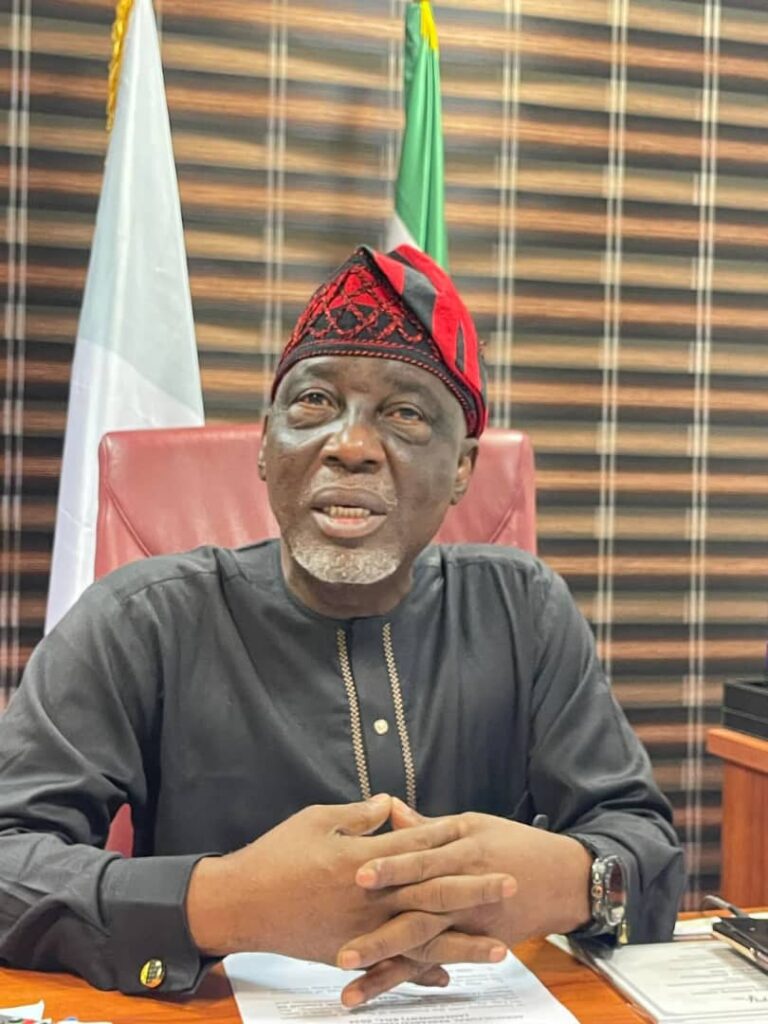
Abba Patrick Moro is currently the Senator representing Benue South Senatorial District in the Federal Republic of Nigeria. (This is important to state clearly because Benue South is the constituency listed in the table, and it is the district historically associated with the seat previously held by David Mark.) Moro assumed office on June 11, 2019, and he is a member of the People’s Democratic Party (PDP).
Benue South (often referred to as Zone C) has a distinct cultural and economic geography within the state. It includes major trading towns and extensive farming communities, and it is influenced by river systems and seasonal environmental conditions. The district’s needs frequently combine “classic rural development” concerns (roads, schools, healthcare access) with environmental pressures (flooding and erosion) and security concerns (community safety and resource tensions in specific localities).
Born on July 3, 1956, in Okpokwu, Benue State, Moro has a background in education and politics. He studied at the University of Lagos, obtaining a Bachelor of Science degree in Political Science and a Master of Science degree in Public Administration. From a governance standpoint, public administration training often aligns with an understanding of institutions—how policies move through bureaucracies, how budgets are implemented, and how public service delivery can be improved.
In 1998, Moro was elected Chairman of Okpokwu Local Government Council. Local government leadership is a particularly important “scale of governance” in geography because it is the level closest to communities—closest to local markets, rural roads, primary schools, and health posts. Politicians who have worked at this level often understand the practical constraints of local service delivery, including limited revenue, staffing shortages, and the constant negotiation required to distribute resources fairly across wards and settlements.
He later contested as the PDP candidate for the Benue State governorship election in April 2007 but was unsuccessful. In July 2011, Moro was appointed Minister of the Federal Ministry of Interior under former President Goodluck Ebele Jonathan. The Interior Ministry portfolio connects directly to national cohesion and internal administration, including institutions linked to citizenship management, migration control, and internal security coordination.
During his tenure as Minister, Moro faced legal challenges related to a recruitment drive that resulted in fatal stampedes in 2014. He has pleaded not guilty to allegations of fraud involving missing application fees amounting to $2.5 million and has been charged by the Economic and Financial Crimes Commission (EFCC) over the immigration recruitment scam. These legal issues are part of his public record and remain important because public trust is a major political resource. In representative democracies, perception of integrity can influence how strongly constituents believe their interests will be defended at the national level.
Beyond politics, Moro has held academic roles, serving as a lecturer at Benue State Polytechnic and holding administrative positions within the institution. This academic and administrative background is relevant in a state where education access, youth employment, and skills development are major issues. From a human geography standpoint, states with growing youth populations require strong education-to-employment pathways; otherwise, unemployment pressures increase migration and social vulnerability.
For Benue South, several geographic priorities tend to recur in public conversations:
- River and floodplain management: seasonal flooding can disrupt farming and damage roads, especially in low-lying communities.
- Road connectivity to markets: agricultural communities depend on stable roads to move produce to urban markets within and beyond Benue.
- Access to social services: distance to clinics and schools remains a constraint in some rural areas, affecting health and educational outcomes.
- Security and community livelihoods: stability influences whether farming systems can operate predictably and whether traders can move safely.
In legislative terms, Senator Moro’s effectiveness is often judged by constituents through a mix of visible and less-visible outcomes: advocacy for federal infrastructure, committee contributions, policy influence, and the ability to draw attention to Benue South’s needs within national debates. As geographers often remind policy audiences: development is not only what is promised—it is what appears on the ground as functioning roads, protected farmlands, resilient communities, and accessible services.
How the Three Senatorial Districts Compare: A Spatial Reading of Representation
Although Benue’s Senators serve the same state, they do not represent identical contexts. Each district has its own development geography—its own mix of opportunities and constraints shaped by environment and settlement patterns. This is why effective senatorial representation often requires both national policy competence and strong local geographic awareness.
Here is a simplified way to understand the differences:
- Benue North-West is often associated with administrative influence and transport centrality, meaning infrastructure and urban service pressures can be particularly visible.
- Benue North-East is commonly linked with extensive rural production spaces and the need for connectivity, security stability, and agricultural support systems.
- Benue South is frequently associated with strong farming and trading networks shaped by culture and river-influenced environmental conditions, including flood risks.
Despite these differences, there are also shared statewide priorities that often unify Benue’s senatorial agenda:
- Agricultural value chains: improving storage, processing, credit access, and transport to reduce losses and raise incomes.
- Security and humanitarian stability: ensuring that communities can farm, trade, and travel without fear.
- Flood resilience and climate adaptation: protecting roads, farms, and settlements from seasonal hazards.
- Youth opportunities: expanding education quality, skills training, and employment pathways to reduce economic distress.
In short, Benue’s senatorial representation is best understood as a three-part geographic mandate: representing different zones with different spatial needs while also presenting a united voice on statewide development and security challenges.
Conclusion: Representation, Place, and the Everyday Meaning of the Senate
The Senate may sit in Abuja, but its decisions echo across Nigeria’s landscapes. For Benue State, the effects are tangible: whether federal roads are maintained, whether agricultural programs reach farmers, whether disaster response arrives quickly during floods, and whether national security policy protects rural livelihoods. These outcomes are place-based, and they matter most to communities when they show up as real improvements in daily life.
The current Senators representing Benue—Tartenger Titus Zam (Benue North-West), Udende Memsa Emmanuel (Benue North-East), and Abba Patrick Moro (Benue South)—each operate at the intersection of lawmaking and geography. Their districts have different environmental and economic profiles, but all three are connected by a shared challenge: translating Benue’s needs into national priorities within a complex federation.
For readers, the most useful takeaway is this: to evaluate representation, watch for both the visible signs (projects, public engagements, advocacy) and the structural signs (committee influence, oversight, budget priorities, and policy work). In a developing federation, those structural decisions often determine whether communities at the margins become part of national progress—or remain underserved.