Are you a resident of Kebbi State, Nigeria, interested in knowing who your current Senators are? This guide provides a comprehensive list of current Kebbi State Senators, including their names, political party affiliations, the Senatorial Districts they represent, and an expanded biography that explains their public roles in a way that is easy to follow.
As an expert geographer, I also add an important layer that many lists miss: place. In a state like Kebbi—defined by the River Niger, the Sokoto-Rima river system, wide floodplains, dry-season irrigation, cross-border trade routes, and a predominantly rural settlement pattern—political representation is not just about party and personalities. It is also about how national policy decisions translate into real outcomes across landscapes: farmland productivity, flood control, road access, security on transport corridors, education reach in remote communities, and the management of natural resources that support livelihoods.
Kebbi’s three senatorial districts (Central, North, and South) are not merely electoral lines. They are development zones with different geographic pressures and economic strengths. Some areas are shaped by riverine fisheries and irrigation agriculture; others by upland settlements, forest–savanna transitions, and long-distance road networks that link Kebbi to Sokoto, Zamfara, Niger State, and the Republic of Niger. Understanding this spatial context helps you better interpret what your Senators do, why constituency needs differ by district, and how legislative priorities often reflect local environmental realities.
This article therefore serves two goals at once: first, it clearly lists Kebbi’s current Senators; second, it explains their roles and backgrounds while connecting representation to the everyday geography of Kebbi State.
List Of Current Senators Representing Kebbi State
Every Nigerian state is represented in the Senate by three Senators—one from each senatorial district. Kebbi State is no exception. These Senators participate in lawmaking, budget approvals, and oversight of federal ministries and agencies. Yet in practical terms, citizens also expect their Senators to act as advocates: drawing federal attention to local infrastructure gaps, security concerns, agricultural needs, and environmental challenges such as flooding, erosion, and land degradation.
Before the table, here is a quick geographic guide to what often distinguishes the districts:
- Kebbi Central includes important administrative and market spaces around the state capital axis (Birnin Kebbi) and is closely tied to transport and governance functions, as well as commerce and farming.
- Kebbi North is strongly shaped by the Sokoto-Rima system, extensive farming and irrigation potential, and settlement patterns where access, water management, and rural development are recurring priorities.
- Kebbi South includes areas linked to the River Niger corridor, fisheries, agriculture, and long-distance trade routes, with some communities facing environmental and infrastructural constraints tied to terrain and distance from major service nodes.
Now, here is the complete list of the current Senators representing Kebbi State, as presented in your source material.
| Name | Position | District | Tenure | Gender | Party |
|---|---|---|---|---|---|
| Adamu Aliero | Senator | Kebbi Central | 2015 – Present | Male | PDP |
| Yahaya Abubakar Abdullahi | Senator, National Assembly | Kebbi North | 2023 – Present | Male | PDP |
| Garba Maidoki | Senator, National Assembly | Kebbi South | 2023 – Present | Male | PDP |
How Geography Shapes Senate Representation in Kebbi State
To understand why Kebbi’s Senators are important, it helps to understand what makes Kebbi geographically distinct within Nigeria. Kebbi lies in the North-West, positioned within the Sudan savanna ecological belt, with Sahel-like dryness pushing in from the far north and wetter influences increasing toward river corridors. The state’s economy and settlement geography are heavily influenced by water availability—especially the Niger River and the Sokoto-Rima basin—which supports irrigation, fisheries, and floodplain agriculture.
This water-based geography creates both opportunity and risk. On the opportunity side, river systems can support dry-season farming, rice production, vegetable cultivation, and fishery livelihoods—activities that stabilize household income and strengthen local food supply chains. On the risk side, seasonal flooding can destroy crops, damage roads, isolate communities, and trigger disease outbreaks when water stagnates around settlements.
In addition, Kebbi’s road network includes corridors that matter beyond the state itself—routes that carry agricultural produce, livestock, and commercial goods to and from neighboring states and border areas. When security deteriorates or roads fail, the “distance” between Kebbi communities and markets effectively expands: travel time increases, transport costs rise, and the competitiveness of local produce declines. This is why transport committees, security oversight, and infrastructure advocacy are not abstract political tasks; they are central to Kebbi’s economic geography.
Finally, Kebbi’s population is largely rural, with many communities dependent on smallholder agriculture. Rural development is therefore not a side issue—it is the main development story. Access to healthcare, quality education, safe water, and electricity in rural districts can be uneven. When services concentrate in a few urban nodes, rural communities face a “service-distance penalty” that affects maternal health outcomes, school completion rates, and overall well-being. Senators, through budget influence and oversight, can advocate for fairer distribution of federal programs so that development does not remain geographically concentrated.
With this geographic context in mind, the three Senators below can be understood not only by their biographies, but by how their experiences and committee roles connect to the spatial needs of their districts.
1. Adamu Aliero
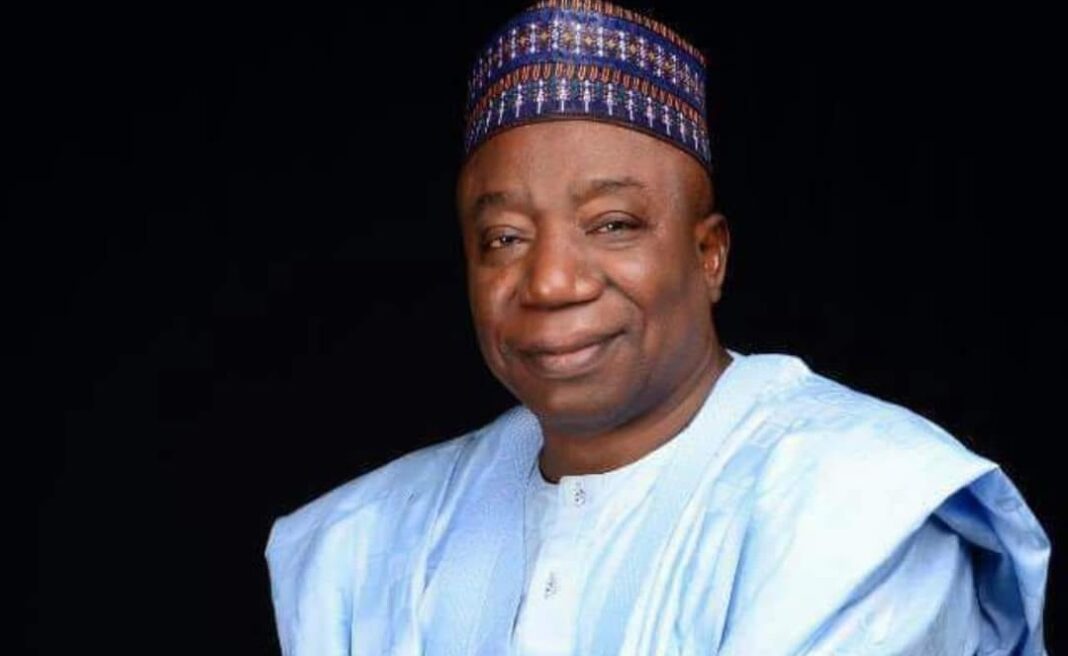
Adamu Aliero serves as the Senator representing Kebbi Central senatorial district, a position he has held since 2015. Within Kebbi’s political geography, Kebbi Central is closely linked to administrative influence and state-level coordination, especially because the state capital and key institutions cluster within this zone. Constituents in such districts often pay particular attention to roads, urban services, public institutions, and economic opportunities that radiate outward from the administrative core.
Aliero’s political career includes multiple high-profile roles. He served as governor of Kebbi State from 1999 to 2007, a period that coincided with Nigeria’s return to civilian rule and the early years of modern state-level development planning in the Fourth Republic. He also served as Minister of the Federal Capital Territory from December 2008 to March 2010. That FCT experience is relevant because the FCT is a planned administrative space with intense land-use and transport demands, and leadership there requires an understanding of infrastructure coordination, settlement management, and the politics of rapid urban growth.
In terms of education, Aliero studied at Ahmadu Bello University and earned a Bachelor of Science degree in political science in 1980. His early career was rooted in public administration: he began as an administrative officer at the College of Education in Sokoto in 1981, later joining the Nigeria Immigration Service. This blend of administration and security-related institutional experience is not trivial in a region where mobility, borders, and internal security can strongly shape livelihoods.
Aliero began his political journey in 1998 when he contested and won a Senate seat representing the Kebbi Central constituency. The text notes that the results were annulled initially, but he later emerged victorious in subsequent elections and became governor in 1999, serving two consecutive terms until 2007. This path illustrates something common in Nigerian political landscapes: political careers often move between legislative and executive roles, and each role builds a different kind of influence and policy perspective.
His political affiliations have changed across time, spanning parties including the Peoples Democratic Party (PDP), the All Nigeria Peoples Party (ANPP), and the Congress for Progressive Change (CPC), among others. Party switching is often interpreted purely as politics, but it also reflects how political coalitions are built across space in Nigeria. Parties are not just ideologies; they are networks—linking local structures, state-level stakeholders, and national alliances. A politician’s ability to operate across these networks can influence their capacity to negotiate for constituency priorities at the federal level.
In the 10th Senate, Aliero’s influence is also reflected through committee leadership: he was appointed as chairman of the Senate Committee on Land Transport. From a geographic perspective, this is a significant portfolio. Land transport is one of the primary tools through which a state’s economic map is connected. Roads and transport regulation influence:
- Farm-to-market access: whether agricultural goods reach markets in time and in good condition.
- Regional trade: movement of goods across state boundaries and toward border corridors.
- Mobility and safety: accident risk, travel time, and security along highways.
- Service access: how easily people can reach schools, clinics, and administrative offices.
For Kebbi Central, transport is not merely about the convenience of commuters. It is about the economic circulation of the entire state: Birnin Kebbi’s markets depend on inflows of produce from rural communities; farmers depend on price signals and access to buyers; and residents depend on the ability to travel safely during the rainy season when roads may degrade. When transport systems function poorly, they create “friction” that can trap communities in low-income cycles despite strong productive potential.
As a Senator, Aliero is expected to represent Kebbi Central’s concerns while contributing to national policy. In practical terms, that means participating in debates, supporting legislation, and using oversight to ensure federal transport, agriculture, and public service initiatives are implemented effectively. For a district linked to the state’s administrative heart, a recurring public expectation is that representation should translate into visible institutional improvements—better connectivity, stronger federal presence, and policies that support trade and public-sector efficiency.
From a development-geography viewpoint, a key measure of success for Kebbi Central representation is whether transport and service networks become more reliable—reducing travel costs, supporting local enterprise, and improving access to essential services across the district’s towns and rural edges.
2. Yahaya Abubakar Abdullahi
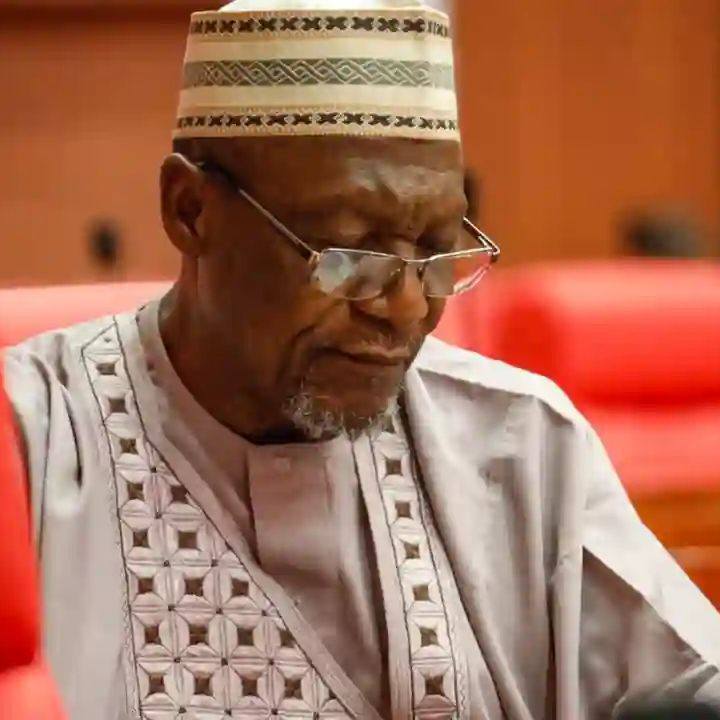
Yahaya Abubakar Abdullahi is a Nigerian politician and associate professor. He represents Kebbi North Senatorial District, and his profile combines academic specialization with high-level legislative experience. For a largely rural and agriculturally significant zone like Kebbi North, this blend of expertise matters because rural development is not only about distributing inputs; it requires understanding how communities organize production, how markets function, and how institutions either support or undermine local economies.
The source text notes that Abdullahi won senatorial elections in 2015 and 2019, first under the All Progressives Congress (APC), and later switched to the Peoples Democratic Party (PDP). Party switches are common in Nigerian politics, but in geographic terms they can also be interpreted as strategic repositioning within evolving political coalitions, often influenced by state and regional dynamics. What remains constant is the district’s needs: agriculture, water management, rural connectivity, and security—issues that do not disappear with party labels.
Academically, Abdullahi held positions at Ahmadu Bello University and the University of Lagos, specializing in Rural Sociology, Agricultural Institutions, and Economic Development. These are not abstract fields in Kebbi. They connect directly to how farming communities organize land use, how cooperatives form, how credit is accessed, and how extension services reach villages. In many rural Nigerian settings, the main barrier to prosperity is not simply “working hard”; it is the structure of opportunity—market access, storage, transport, input reliability, and the institutional support that allows farmers to scale beyond subsistence.
Abdullahi’s political career includes a major leadership role: he served as Senate Majority Leader from June 2019 to June 2022. Senate leadership positions shape the flow of legislation and influence negotiation among Senators. While a Majority Leader must focus on national legislative coordination, such roles often expand a politician’s ability to connect local concerns to national agendas—especially when the leader understands how to translate district needs into policy language that resonates at the federal level.
He also served in the Nigerian Civil Service, notably as Permanent Secretary of the Ministry of Niger Delta Affairs. On the surface, that ministry is geographically distant from Kebbi. Yet the skills involved—managing federal programs, coordinating large development initiatives, and navigating complex institutional environments—are transferable. Moreover, the Niger Delta ministry deals with environmental and development complexities such as community livelihoods, resource management, and project implementation challenges. Those themes resonate with Kebbi’s own environmental and livelihood contexts, even if the ecosystems differ.
To understand what Kebbi North representation typically demands, consider the district’s development geography. Kebbi North includes communities where farming systems, seasonal climate patterns, and water management shape everyday life. In such landscapes, a few recurring issues tend to dominate public concerns:
- Irrigation and water access: dry-season farming can transform rural incomes, but it requires reliable water control, pumps, canals, and maintenance.
- Floodplain risk: the same rivers that support agriculture can also flood settlements and farmland during peak rains, damaging roads and crops.
- Rural roads: many communities rely on feeder roads that can become impassable in rainy months, effectively isolating households and markets.
- Agricultural value chains: storage, processing, and market access are essential for turning farming effort into stable income.
- Security and mobility: where insecurity rises, farmers may reduce field access and traders may shift routes, weakening the district economy.
In geographic terms, Kebbi North’s key challenge is managing the relationship between land, water, and people. Where water is abundant at the wrong time, it destroys; where it is absent at the wrong time, productivity falls. Effective development therefore relies on both physical infrastructure (dams, canals, drainage, roads) and institutional infrastructure (cooperatives, extension systems, market regulation, and fair access to credit).
As a Senator with academic grounding in rural development and a history of legislative leadership, Abdullahi is positioned—at least in principle—to frame Kebbi North’s needs in terms of institutions and systems, not only projects. For example, rather than focusing solely on distributing farm inputs, a systems approach considers how inputs, storage, transport, and market access work together. In the long run, that integrated approach is what turns rural productivity into durable development.
Citizens evaluating representation in Kebbi North may therefore look for both visible advocacy (projects and interventions) and structural engagement (policies and oversight that improve agricultural and rural development institutions). A district shaped by rural livelihoods benefits most when representation helps reduce the distance between rural producers and national economic opportunity.
3. Garba Maidoki
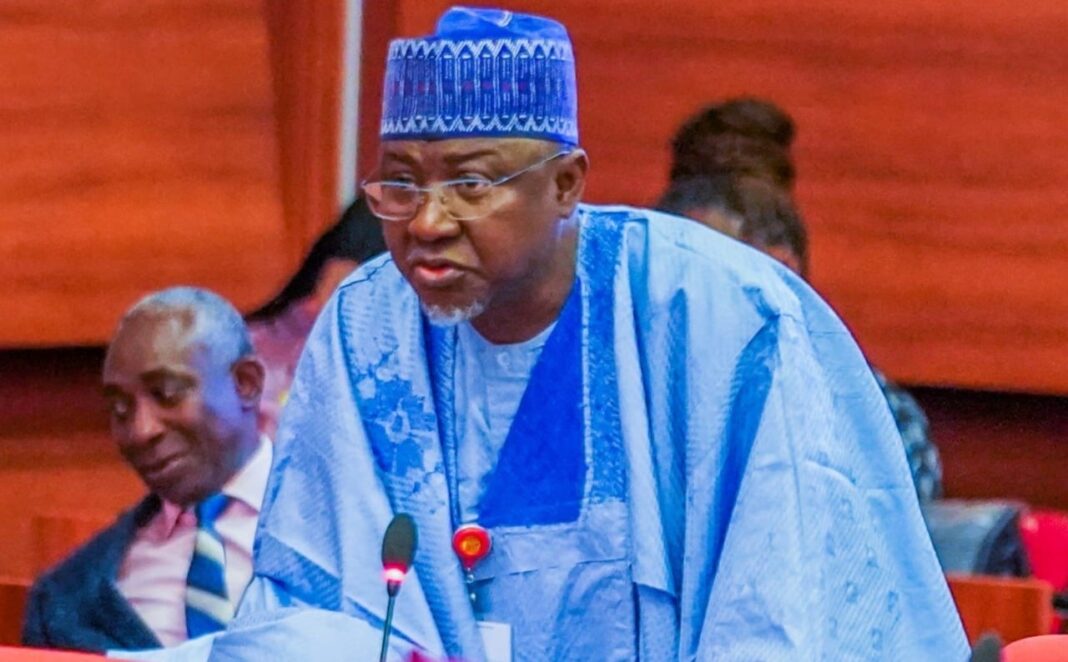
Garba Musa Maidoki is one of the current Senators representing Kebbi State, serving as the Senator for Kebbi South Senatorial District. He won the seat in the February 25, 2023, Senate election, representing the People’s Democratic Party (PDP). His emergence is particularly notable because elections in Kebbi South are often competitive, shaped by local networks, party strength, and the district’s evolving development concerns.
According to the figures in your source text, Maidoki secured victory with 75,232 votes, defeating the incumbent Senator Bala Ibn Na’Allah of the All Progressives Congress (APC), who had 70,785 votes. Beyond the numbers, the geographic interpretation is that Maidoki achieved sufficient support across the district’s communities to overcome the advantages typically associated with incumbency—such as visibility, established networks, and political experience.
Kebbi South occupies a strategic development space within the state. Parts of the district are strongly influenced by the River Niger corridor and its associated livelihood systems. Riverine environments tend to support:
- Fishing and fisheries trade (including processing and market distribution);
- Floodplain farming that can be highly productive but exposed to seasonal water risks;
- Transport and trade routes that connect communities to broader commercial networks.
Yet riverine and corridor-based development also comes with recurring vulnerabilities. Flooding can damage homes, wash away roads, and disrupt schooling and healthcare access. In addition, if road corridors are insecure or poorly maintained, trade becomes more expensive and less predictable. For districts that rely on trade and movement, “mobility reliability” is a major determinant of economic health.
Another key issue in Kebbi South is the distribution of services across space. In many districts with a mix of towns and rural communities, essential services can cluster in a few nodes, leaving peripheral settlements underserved. This creates daily burdens: long travel times to clinics, higher costs for schooling, and reduced access to administrative support. In geography, we describe this as a “central place” pattern—where services concentrate in central locations. The problem is not centralization itself (some concentration is efficient), but the degree of inequality it produces when peripheral communities lack transport or when roads are unreliable.
As a new Senator (2023–present), Maidoki’s role includes learning Senate procedures while representing district needs in national debates. Many constituents will evaluate him through a practical lens: whether he can amplify Kebbi South’s priorities in Abuja and whether that advocacy can translate into improvements on the ground—especially in transport connectivity, flood management, security, and economic support for fisheries and agriculture.
For Kebbi South, meaningful development outcomes often come from interventions that combine environment and economy. For example, flood-control and drainage investments protect farms and roads; stable transport networks support fish and farm produce trade; and targeted rural electrification can strengthen cold storage and processing opportunities, which in turn raise incomes and reduce post-harvest losses. These are not isolated projects; they are linked elements of a livelihood landscape.
Key Issues Kebbi’s Senators Commonly Face (A Practical, Place-Based Breakdown)
Even though each Senator represents a different district, there are shared statewide pressures that repeatedly appear in Kebbi’s development conversation. Understanding them helps citizens interpret Senate debates and evaluate representation more realistically.
1) Agriculture as a full system, not just a sector
Kebbi’s economy is deeply tied to agriculture. But agriculture is not only what happens on farms. It includes inputs, extension services, irrigation management, storage, processing, transport, and market pricing. When one link fails—poor roads, lack of storage, insecurity, weak irrigation maintenance—farmers’ profits fall even if yields are good.
Senators can influence agricultural outcomes through national budgets, oversight of agriculture agencies, and legislation that supports rural finance, value addition, and market systems. A geographically intelligent agricultural approach recognizes that what works in a dry northern corridor may differ from what works in a riverine floodplain. Policy must match the ecology.
2) Transport corridors and the economics of distance
In Kebbi, distance is felt most through transport costs. A community may be “close” to a market in straight-line kilometers but effectively far if the road is damaged, insecure, or seasonally flooded. Senators who influence land transport policy—or who can advocate for strategic federal road rehabilitation—are addressing one of the most powerful levers of regional development.
This is why committee roles like Land Transport are significant: they connect legislative oversight to the physical networks that hold the economy together.
3) Flooding, water management, and climate pressure
Kebbi’s river systems bring productivity but also flood risk. Flood management requires both engineering (drainage, embankments, water-control structures) and planning (restricting high-risk settlement expansion into flood zones, improving early-warning systems, and ensuring disaster response capacity). Senators can press for stronger national disaster planning and for budget support to protect vulnerable communities.
4) Rural services: water, health, education
In many rural parts of Kebbi, the real question is access: how far people travel to find safe water, a functional clinic, or a school with adequate staffing. Service distribution is a geographic challenge. Where services cluster too strongly in a few towns, rural communities face daily disadvantages that accumulate over years into deep inequality.
Senators can influence the distribution of federal programs, support budget lines that strengthen rural service delivery, and conduct oversight to ensure interventions reach intended communities—not just the easiest locations to serve.
5) Security and community stability
Security is a development issue because it shapes mobility. When people fear travel, markets shrink, schooling is disrupted, and agricultural activity declines. While Senators do not command security agencies, they have oversight roles and influence policy debates that shape internal security funding and coordination. In geographic terms, secure mobility keeps the state’s economic network intact.
How to Use This Information as a Citizen of Kebbi State
Knowing the names of your Senators is a starting point; the next step is meaningful engagement. Citizens often ask, “What has my Senator done?” A more effective question—especially in a state with complex geographic needs—is: “Which specific constraints in my area are limiting development, and how can senatorial advocacy address them?”
Here are practical, place-based ways to engage:
- Document problems by location: identify recurrent flood points, broken road segments, and underserved service areas, and describe them clearly with landmarks.
- Engage as organized groups: farmers’ associations, traders’ unions, youth groups, and community development associations carry stronger collective voice than isolated complaints.
- Ask about oversight, not only projects: oversight can improve whether existing budgets and programs are implemented properly in your district.
- Follow committee relevance: committees such as Land Transport, Agriculture-related bodies, or security-linked committees can be especially relevant to Kebbi’s development map.
In geographic terms, the best citizen engagement is specific, evidence-based, and linked to the lived environment. That is how representation becomes measurable.
Conclusion: Kebbi’s Senators and the Geography of Everyday Development
Kebbi State’s current Senators—Adamu Aliero (Kebbi Central), Yahaya Abubakar Abdullahi (Kebbi North), and Garba Maidoki (Kebbi South)—operate at a national level, but their decisions and influence are ultimately judged at the local level. In a state shaped by rivers, floodplains, rural livelihoods, and long-distance transport corridors, effective representation is representation that reduces practical hardships: lowering transport costs, strengthening agricultural systems, improving rural services, and protecting communities from seasonal environmental risk.
From a geographer’s perspective, the most important takeaway is that politics leaves footprints. You see those footprints in the condition of roads after the rainy season, in whether irrigation systems are maintained, in the reliability of access to clinics and schools, and in whether communities can move and trade safely. Senate representation matters because it helps decide which footprints appear and where—across Kebbi’s towns, villages, farmlands, and river corridors.