Are you looking to learn more about the senators representing Jigawa State in Nigeria? This guide provides a well-structured, up-to-date list of the current senators, including their party affiliation, the senatorial district they represent, and a clear overview of their backgrounds.
To make this more than a simple name-and-party directory, I’ll also interpret senatorial representation through the lens of an expert geographer. In a place like Jigawa—shaped by semi-arid climate conditions, seasonal rivers, irrigation agriculture, fast-growing towns, and a long dry season—politics is deeply spatial. The most important public questions are often geographic ones: Where is water most reliable? Which roads link farms to markets? Which communities sit on floodplains? Where are services such as clinics and secondary schools concentrated, and where are they sparse?
Understanding Jigawa’s senators therefore involves understanding Jigawa’s development map. Senators operate at the federal scale in Abuja, but their effectiveness is judged locally in places like Dutse, Hadejia, Kazaure, Gumel, Ringim, Birnin Kudu, and many smaller towns and rural settlements. When federal decisions affect agriculture, water resources, roads, education funding, or security coordination, the results appear on the ground as real changes—better mobility, improved markets, safer communities, or (when governance fails) persistent vulnerability and inequality.
List Of Current Senators Representing Jigawa State
Jigawa State is represented in Nigeria’s Senate by three Senators—one from each senatorial district. These districts are Jigawa North-East, Jigawa North-West, and Jigawa South-West. Each district is a political constituency, but it also functions as a development zone with distinct geographic needs.
Before the table, it helps to clarify what Senators do in a way that connects directly to everyday life in Jigawa:
- They make laws that shape national priorities on agriculture, education, health, infrastructure, security, and the economy.
- They approve budgets, which influence where federal projects and programs can be funded and implemented.
- They conduct oversight of federal ministries and agencies, helping to ensure that promised projects are executed and public resources are used properly.
- They represent their districts by raising motions, debating issues, and advocating for interventions that matter to their constituents.
In Jigawa, these responsibilities are strongly tied to a few persistent geographic realities: a climate that demands careful water management, an economy heavily dependent on agriculture and trade networks, and a settlement pattern where many communities are rural and therefore sensitive to road quality, service distance, and seasonal isolation. With that context, here is the list of current Senators representing Jigawa State.
| Name | Constituency | Tenure | Gender | Party |
|---|---|---|---|---|
| Abdulhamid Mallam- Madori Ahmed | Jigawa North-East | 2023 – Present | Male | APC |
| Uba Babangida Hussaini | Jigawa North-West | 2023 – Present | Male | APC |
| Mustapha Khabeeb | Jigawa South-West | 2023 – Present | Male | PDP |
A Geographer’s Context: Understanding Jigawa State as a Development Landscape
To understand what representation means in Jigawa, we have to begin with the state’s geographic setting. Jigawa lies in Nigeria’s North-West, within a broad semi-arid belt where the year is defined by a long dry season and a shorter rainy season. This climate imposes a clear policy reality: development depends on managing water and managing land. Rainfall variability affects harvests. Dry-season water availability influences irrigation potential. Land degradation and desertification pressures affect long-term livelihoods. When you listen carefully to local debates about “development,” you will often hear geography hiding inside the conversation—concerns about irrigation schemes, flood damage, soil fertility, and the costs of moving goods on poor roads.
Jigawa’s economy is strongly tied to agriculture. This includes rain-fed cropping during the wet season and, in many areas, dry-season farming supported by irrigation. That means the state’s development map is also a water map: communities near reliable water sources often have stronger dry-season livelihoods and more stable incomes. In contrast, communities with less access to water infrastructure may depend almost entirely on seasonal rains, making them more vulnerable to drought, crop failure, and economic stress.
But agriculture is only one layer. Jigawa is also shaped by trade and mobility networks. Towns and markets function as nodes in a wider system of movement: livestock routes, grain supply chains, transport corridors, and cross-border interactions. If roads are poor or insecure, transport costs rise and market opportunities shrink. In geography, we call this the “friction of distance”—the idea that distance is not merely kilometers on a map, but the time, cost, and risk required to travel.
Environmental hazards add another dimension. While Jigawa is often associated with dry conditions, it also experiences flooding—especially in low-lying areas and near river systems during intense rainfall. Floods can destroy crops, damage roads, collapse small bridges and culverts, and temporarily isolate communities. Flooding also affects health conditions by contaminating water sources and increasing the spread of waterborne diseases. Therefore, in Jigawa, both drought and flooding can be development threats, and both require planning and infrastructure that match local terrain and hydrology.
Finally, Jigawa has a predominantly rural settlement pattern. Many residents live in small towns and villages where access to services can be uneven. When clinics are far away, maternal and emergency outcomes worsen. When secondary schools are distant, education access drops—especially for students who cannot afford transport. When water points are unreliable, hygiene and health risks increase. These service-distance issues are geographic at their core, and they shape what constituents want their Senators to prioritize at the national level.
With this setting in view, the profiles below explain the three current Senators and connect their roles to Jigawa’s place-based needs.
1. Abdulhamid Mallam- Madori Ahmed
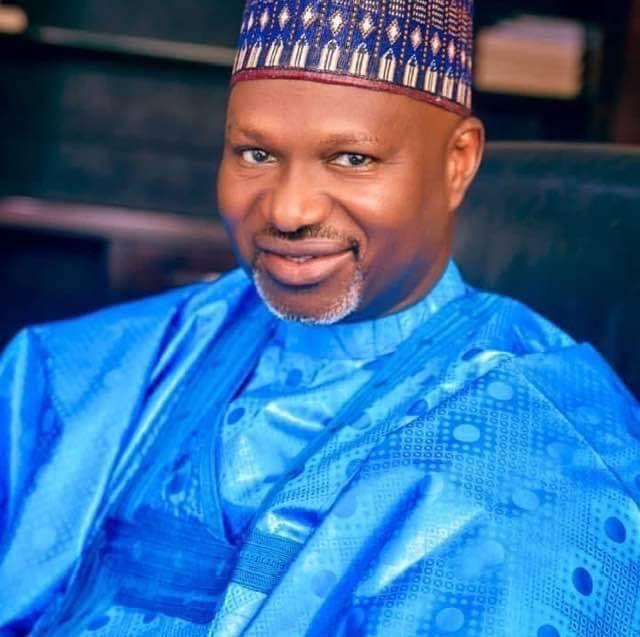
The current senator representing Jigawa State is Abdulhamid Mallam-Madori Ahmed. Abdulhamid Mallam-Madori Ahmed serves as the senator for Jigawa North East Senatorial District in the 10th Senate, representing the All Progressives Congress (APC). His position places him in charge of voicing the concerns of communities within Jigawa North-East—communities whose priorities often reflect rural livelihoods, farming systems, market access, and water-related development challenges.
The source text notes that he started his political career in the House of Representatives during the Third Republic in 1992. That early exposure to national politics is important because legislative work rewards experience. Over time, seasoned politicians often develop a clearer sense of how to translate local issues into federal policy language—how to push for budget lines, how to engage committees, and how to use oversight to press federal agencies to deliver projects.
In the recent elections referenced in the source material, he secured victory with 136,977 votes, defeating Muhammad Dr Nuruddeen of the People’s Democratic Party (PDP), who had 107,455 votes. Other candidates listed include Muhammad Kabiru of the Social Democratic Party (SDP), Baffa Abba Abdullahi of the African Democratic Congress (ADC), and Ibraheem Aminu of the Action Democratic Party (ADP). These figures are significant not only politically, but geographically: election results reflect the distribution of support across towns, wards, and communities that make up the district. They also shape public expectations—strong wins can intensify demands for visible results, while close contests can motivate a Senator to maintain broad outreach across diverse localities.
Abdulhamid Mallam-Madori Ahmed’s victory signifies the trust and support of the people of Jigawa North East in his leadership and representation. As a member of the APC, he is expected to champion the interests of his constituents and contribute to the legislative process for the development of Jigawa State and Nigeria as a whole.
From a geographer’s viewpoint, the most practical way to understand what “championing interests” means is to identify the main geographic constraints that typically shape life in a North-East senatorial district context in Jigawa:
- Water and irrigation reliability: where irrigation is available, households can farm beyond the rainy season; where it is not, incomes are more seasonal and fragile.
- Farm-to-market roads: feeder roads determine whether grain and vegetables reach markets cheaply and on time, especially during peak rains.
- Flood and drainage control: low-lying areas can face flood damage that destroys crops and disrupts mobility.
- Rural services: education and healthcare outcomes are strongly affected by distance to facilities and the quality of transport routes.
A Senator representing such a district is often expected to prioritize practical interventions that reduce vulnerability: supporting irrigation and agricultural value chains, advocating for key road links, and pressing for social services that reach beyond major towns into smaller settlements.
At the federal level, these priorities appear in specific forms: lobbying for agricultural and water-resource budgets, supporting policies that strengthen rural credit and extension services, ensuring that federal roads and bridges within the district receive attention, and using oversight to push agencies to complete projects that are already funded.
It is also important to understand that development is not only about building new projects. In many rural Nigerian contexts, maintenance is the real challenge. A borehole built without a maintenance system becomes useless. A rural road graded without drainage fails after one rainy season. Therefore, strong representation often includes advocating for systems—maintenance plans, community water management committees, and realistic budgeting that accounts for long-term upkeep rather than one-time construction.
In summary, Senator Abdulhamid Mallam-Madori Ahmed’s role can be interpreted as representing a district where land and water management—combined with mobility and service access—often define household welfare. His political experience offers the potential to navigate federal structures effectively, but constituents ultimately judge representation by whether daily realities improve: better harvest stability, smoother market access, and stronger public services.
2. Uba Babangida Hussaini
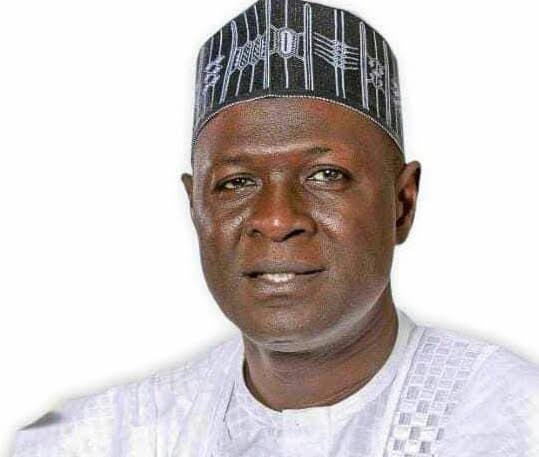
Uba Babangida Hussaini is the current senator representing Jigawa North-West Senatorial District and is a member of the All Progressives Congress (APC). His background, as presented in the source text, is strongly tied to public administration and the civil service—an important foundation for understanding government systems, budgeting processes, and the practical mechanics of policy implementation.
Born on February 6, 1964, in Kazaure, Jigawa State, Uba Babangida Hussaini holds a Bachelor’s and Master’s degree in Public Administration from Ahmadu Bello University Zaria and the Nigerian Defence Academy, Kaduna, respectively. Public administration training matters for legislative work because the Senate often deals with institutional design: how agencies function, how regulations are enforced, and how budgets translate into services. Senators who understand bureaucracy can sometimes be more effective in oversight—asking the right questions and identifying where implementation breaks down.
He commenced his public service journey in 1987 with the Kano State Government before transferring to the Federal Civil Service in 2011. His career progression led him to the position of Permanent Secretary, first at the Federal Ministry of Defence in September 2020, and later at the Federal Ministry of Works and Housing in December 2020. These postings matter geographically. Defence is tied to security and territorial stability; works and housing are tied to infrastructure, urbanization, and settlement development. In a state like Jigawa, where housing needs grow with population and where roads and public buildings affect connectivity, such experience can inform how a Senator frames policy priorities.
In the election described in the source text, he secured victory with a margin of 52,850 votes, receiving a total of 187,049 votes, while Saminu Ibrahim Turaki of the People’s Democratic Party (PDP) had 134,199 votes. Other candidates listed include Alkali Mohammed Dade of the Social Democratic Party (SDP), Nasiru Bala of the African Democratic Congress (ADC), and Nura Saifuddin of the Abundant Nigeria Renewal Party (ANRP). Again, these figures reflect political competition across the geography of the district, and they also shape public expectations for performance and accessibility.
Senator Hussaini is now in his first term as a Senator and has been representing the interests of his constituents in the 10th Senate. For citizens, the immediate question is often: what are those “interests,” and how are they shaped by the district’s geography?
Jigawa North-West—associated with towns such as Kazaure—sits within a wider semi-arid economic landscape where agriculture and trade remain central. In such settings, development challenges often revolve around:
- Transport connectivity: roads linking towns to regional markets and to state capital routes are essential for trade and public access.
- Rural service distribution: where clinics and schools are unevenly spaced, households face long travel times and higher costs.
- Water supply and sanitation: reliable water points and safe sanitation reduce disease risks and strengthen household resilience.
- Livelihood stability in a dry climate: the long dry season affects farming cycles, household income timing, and food price volatility.
One of the most important concepts in development geography is that infrastructure is not simply a benefit; it is a multiplier. A well-maintained road does not only help drivers; it improves school attendance, reduces maternal health delays, supports commerce, and lowers the cost of moving food. Likewise, a reliable water supply does not only prevent thirst; it improves sanitation, reduces disease, and frees time (especially for women and children) that would otherwise be spent fetching water over long distances.
Because Senator Hussaini has worked at the federal level in ministries connected to defence and works/housing, constituents may reasonably expect him to be comfortable navigating federal institutions—knowing who to engage, how to interpret budget lines, and how to identify the practical steps needed for project delivery. In Nigeria’s governance environment, that institutional navigation can matter as much as public speeches.
From a geographer’s perspective, the best outcomes for Jigawa North-West would be those that strengthen the district’s “development network”:
- roads that stay passable in rainy periods;
- water systems that function beyond the initial commissioning;
- education and health services that are spatially accessible, not concentrated only in major towns;
- security and social stability that allow markets to operate and livelihoods to remain predictable.
In a first Senate term, a lawmaker’s influence often grows through committee participation, relationship-building, and consistent constituency engagement. The district’s geography—its dispersed settlements and transport corridors—means that being accessible to many communities (not only to a single urban center) is part of what residents often interpret as effective representation.
Ultimately, Senator Hussaini’s representation can be read as an attempt to convert administrative and bureaucratic experience into development outcomes that are visible on the ground: improved infrastructure, better service delivery, and stronger support systems for a rural economy operating in a challenging climate.
3. Mustapha Khabeeb
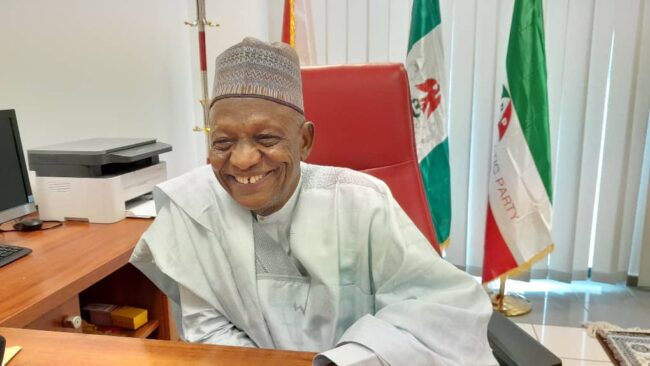
Mustapha Khabeeb, born in 1950, is serving his first term as a Senator representing the Jigawa South-West Senatorial District, representing the Peoples Democratic Party (PDP) within the 10th Senate. The source text also notes that Khabeeb was previously a Member of the 6th and 7th House of Representatives. This earlier legislative experience matters because it suggests familiarity with federal lawmaking and constituency relations, even if the Senate’s procedures and influence patterns differ from the House.
In the 2023 National Assembly Elections, Khabeeb defeated the incumbent Senator, Sabo Nakudu, who was affiliated with the All Progressives Congress (APC). The text states that Khabeeb secured the Jigawa South-West Senatorial seat with a margin of 153,731 votes. While margins are political measures, they also hint at the strength of support across the district and the level of public expectation attached to the victory.
Jigawa South-West’s development geography can be understood through a few key features common to many South-West districts in northern states: a mixture of towns with active market economies and rural hinterlands where farming remains the primary livelihood. These areas are often shaped by transport corridors that connect communities to larger trading hubs, and by land-use systems where agriculture, settlement expansion, and seasonal movement patterns intersect.
From a geographer’s standpoint, the South-West district’s priorities frequently fall into three interlinked categories:
- Economic connectivity: roads and transport services that make it affordable to move produce and goods between farms, markets, and urban buyers.
- Service accessibility: clinics, schools, and water systems that are distributed across space so rural communities are not left behind.
- Land and environmental stability: preventing land degradation and managing water systems to protect crops and settlements from seasonal shocks.
One of the most important geographic ideas here is “resilience.” Rural households build resilience when they have multiple income options (not only one seasonal crop), when they can access markets reliably, and when hazards like flooding do not repeatedly destroy assets. Senators do not directly build farms or markets, but they influence the policies and budgets that support the systems surrounding livelihoods—agricultural financing, rural electrification, water-resource investment, and the maintenance of federal road corridors that carry trade.
Because Mustapha Khabeeb has experience in the House of Representatives, he is positioned to understand constituency dynamics and the importance of being present across communities, not only in one town. In geographic terms, a district is a network. If representation concentrates only in a single node, peripheral settlements may remain underserved. Strong representation recognizes that development problems cluster spatially—certain road segments fail repeatedly, certain areas lack clinics, certain flood-prone zones need drainage—so advocacy must be targeted and location-specific.
In a PDP role within a state where two other senators in the table are APC, Khabeeb’s effectiveness can also depend on coalition-building within the Senate. Nigerian legislative politics often requires cross-party collaboration to push issues forward—especially where committee structures and leadership dynamics influence what bills and motions receive attention. For constituents, the key question is whether such collaboration yields tangible outcomes: better infrastructure, improved agricultural support, stronger public services, and programs that reduce poverty and vulnerability.
In short, Senator Mustapha Khabeeb represents a district where the development conversation often returns to access—access to roads, to markets, to services, and to stable livelihood opportunities. His task is to ensure that the district’s needs are visible in Abuja and that federal interventions do not bypass rural communities in favor of easier-to-reach urban centers.
How the Three Senatorial Districts Differ (A Spatial Comparison)
Although Jigawa’s three senatorial districts operate within the same state government and ecological belt, they do not experience development in identical ways. Geography makes sure of that. Differences in settlement density, distance to major markets, flood exposure, irrigation potential, and infrastructure quality shape the everyday realities of residents—and therefore shape what each Senator is expected to prioritize.
A practical way to compare the districts—without oversimplifying them—is to think in terms of dominant development pressures:
- Jigawa North-East often highlights rural livelihoods, irrigation potential, and the need to stabilize agriculture through water management and better farm-to-market connectivity.
- Jigawa North-West often emphasizes administrative coordination, transport corridors, and service access across dispersed communities—where distance to clinics and schools can shape health and education outcomes.
- Jigawa South-West frequently combines market-town economies with rural hinterlands, where connectivity and social services determine whether livelihoods remain resilient and whether youth can find opportunity locally.
Across all three districts, however, several statewide themes consistently reappear. These themes are so persistent because they are anchored in the state’s physical and human geography.
The Big Development Issues in Jigawa (What Senators Commonly Face)
If you want to evaluate senatorial performance in a meaningful way, it helps to know the “core issues” that repeatedly shape Jigawa’s development debate. Below are the most important, explained in plain language but grounded in geographic reality.
1) Water management: the foundation of livelihoods
In a semi-arid state, water is the most strategic development resource. Water determines whether farmers can cultivate during the dry season and whether households can maintain hygiene and health. Water management includes irrigation schemes, boreholes, water treatment where needed, and the governance systems that keep infrastructure functioning (maintenance budgets, trained operators, community committees).
Senators influence water outcomes through budgets, oversight, and policy. They can push for federal water-resource investment and ensure that projects are not only commissioned but maintained. They can also advocate for climate-adaptation approaches—because rainfall patterns can shift over time, and planning must account for variability rather than assume that historical patterns will remain stable.
2) Agriculture as a value chain, not only a farm activity
Jigawa is agriculturally productive, but the biggest income gains typically come when agriculture is treated as a complete system: inputs, extension services, irrigation, storage, processing, transport, and markets. Without storage, farmers lose value. Without good roads, produce reaches markets late and at high cost. Without access to credit, farmers cannot scale production or adopt improved technologies.
Senators can support laws and budgets that strengthen agricultural institutions and rural finance. They can also press for interventions that encourage agro-processing and local value addition—because processing closer to the farm reduces transport losses and can create jobs that keep young people economically rooted in the state.
3) Roads and mobility: reducing the “distance burden”
In geography, distance becomes a burden when roads are poor, unsafe, or seasonally impassable. A clinic may be “near” on a map but practically far if a road is washed out. A market may be “close” but economically distant if transport fares are high. Roads therefore influence health, education, commerce, and even social cohesion.
Senators influence mobility by supporting infrastructure budgets, monitoring project execution, and advocating for strategic road segments that connect productive rural areas to major markets. The most impactful road interventions are often not the most glamorous; they are the ones that remove the worst bottlenecks—failed bridges, eroded culverts, flood-prone low points, and deteriorated feeder links.
4) Flood risk and drainage: a wet-season development test
Even semi-arid states can face destructive floods. Flooding becomes especially damaging when settlement expansion reaches floodplains, when drainage is weak, and when roads lack adequate culverts. Flooding damages crops and infrastructure and can trigger disease outbreaks through water contamination.
Senators can push for stronger disaster preparedness and for infrastructure designs that match hydrology—meaning roads built with proper drainage, not simply paved surfaces. They can also press for early warning systems, relief coordination, and rehabilitation funding when disasters strike.
5) Health, education, and the geography of service access
Service access is uneven across rural Nigeria, and Jigawa is no exception. Many communities are far from advanced healthcare facilities and well-resourced schools. This creates a service-distance penalty: the farther people must travel, the less likely they are to seek care early, the more expensive education becomes, and the more inequalities widen across communities.
Senators, through budget influence and oversight, can advocate for federal programs that strengthen primary healthcare, improve staffing, and expand educational access. Effective advocacy is often specific: identifying underserved clusters and pushing for targeted upgrades rather than spreading limited resources too thinly.
6) Youth opportunity and migration
When local economies do not generate enough jobs, young people migrate. Migration is not automatically negative—it can bring remittances and new skills—but distress migration can weaken local economies and increase vulnerability. Senators can influence youth opportunity indirectly through support for skills training, small business financing, agricultural value addition, and infrastructure that attracts investment.
In a state like Jigawa, youth opportunity is deeply tied to the rural economy. The most sustainable approach is often to raise rural incomes through agriculture systems, agro-processing, and market connectivity, while also expanding non-farm skill pathways for young people in towns.
How to Use This Guide as a Citizen of Jigawa State
Knowing your Senators is valuable, but civic value increases when knowledge becomes action. From a geographic standpoint, the most effective citizen engagement is location-specific: it identifies where problems occur and how they affect daily life.
Here are practical ways to use this information:
- Document issues by place: identify the exact road segment that fails during rains, the community that lacks a reliable water point, or the market area with repeated flooding.
- Engage as groups: farmers’ associations, traders’ unions, community development associations, and youth groups often communicate needs more effectively than isolated individuals.
- Ask about oversight and budgets: many projects fail not because they were never approved but because they were poorly implemented or not maintained.
- Track measurable Senate activity: motions raised, bills sponsored, committee contributions, and public oversight engagements are concrete indicators of representation.
In simple terms: geography helps accountability. When you can clearly say where a problem is and what it causes, it becomes harder for leaders to dismiss it as vague complaint.
Conclusion: Jigawa’s Senators and the Real Map of Development
The current Senators representing Jigawa State—Abdulhamid Mallam-Madori Ahmed (Jigawa North-East), Uba Babangida Hussaini (Jigawa North-West), and Mustapha Khabeeb (Jigawa South-West)—serve in Abuja, but their representation is measured across Jigawa’s landscapes: in farms and markets, in roads and bridges, in clinics and classrooms, and in the reliability of water systems that hold rural livelihoods together.
As an expert geographer, I emphasize a final principle: politics leaves footprints. You see those footprints in travel time to health facilities, in the ease of moving produce to market, in whether floodwaters repeatedly invade neighborhoods, and in whether young people can build viable futures without being forced to leave home by economic hardship. Senators matter because they influence which footprints appear—and how evenly development is distributed across communities.
If you want to stay informed, keep this list for reference, follow Senate updates, and pay attention to the issues that matter most in your locality. The strongest representation often emerges where citizens remain informed, organized, and consistent in demanding place-based solutions.