Are you looking to stay informed about who represents you in Imo State’s Senate? This guide provides an up-to-date overview of the current Senators. Beyond the names, I explain what senatorial representation means in practical terms—how decisions made in Abuja can shape roads, markets, security, education, and environmental management across Imo’s towns and rural communities.
Maybe you’re interested in their party affiliation, area of representation, or even their background—this resource is here to help. I also write from the standpoint of an expert geographer, because the “who” of politics is inseparable from the “where.” In Imo State, geography is not an abstract school subject; it is the map of daily life. It determines how easy it is to move from one community to another, which areas face flooding or erosion, where jobs concentrate, and how public services reach people.
Imo sits in Nigeria’s South-East, within a humid tropical environment where rainfall is abundant and intense during the wet season. That climatic setting supports farming and a green landscape, but it also creates persistent environmental pressures—especially on roads, drainage systems, and slopes. In many parts of Imo, heavy rainfall accelerates gully erosion, weakens road shoulders, and contributes to flooding in low-lying areas. These physical realities shape what citizens ask of their representatives: better infrastructure, better environmental control, and development that reaches beyond a few urban centers.
In administrative terms, Imo State is represented in the Nigerian Senate by three Senators—one from each senatorial district: Imo North, Imo East, and Imo West. These districts are sometimes discussed in the language of “zones” (Okigwe zone, Owerri zone, and Orlu zone). While the Senate seats are political, the districts are also geographic units: each contains different settlement patterns, economic activities, and connectivity needs. Understanding that district geography helps you interpret why one Senator may emphasize roads and works, another may focus on governance and local administration, and another may prioritize investment, markets, or institutional reforms.
To keep this guide useful and citizen-friendly, I begin with a clear table and then provide a detailed profile of each current Senator, written in a way that is engaging, easy to comprehend, and faithful to the original message.
List Of Current Senators Representing Imo State
Each Senator represents a distinct constituency and contributes to national lawmaking through debates, committee work, and oversight of government agencies. In Nigeria, committees are particularly important because much of the detailed work of the Senate happens there: examining budgets, scrutinizing projects, and shaping policies that later show up as real outcomes in states and communities.
From a geographer’s perspective, senatorial influence can be understood through a simple question: how does representation reduce the penalties of distance, risk, and exclusion? Distance is not just kilometers; it is the cost and time of travel on real roads. Risk includes flooding, erosion, and insecurity that disrupt livelihoods. Exclusion includes communities that feel left out of development because services are too far, too limited, or too unevenly distributed. Senators do not control everything, but they can influence the national choices that help or harm these realities.
| Name | Constituency | Term | Gender | Party |
|---|---|---|---|---|
| Chiwuba Patrick Ndubueze | Imo North | 2023 – Present | Male | APC |
| Ezenwa Francis Onyewuchi | Imo East | 2019 – Present | Male | LP |
| Bonaventure Osita Izunaso | Imo West | 2023 – Present | Male | APC |
A Geographer’s Guide to Imo’s Senatorial Districts (Why “Where” Matters)
Many people read senatorial districts as electoral categories only, but a district is also a development space. Each district contains a network of towns, villages, markets, roads, and social institutions that operate together. When a district has strong road connectivity, the local economy often performs better because people can move goods and services efficiently. When connectivity is weak—bad roads, broken bridges, poor drainage—economic activity becomes more expensive and less predictable.
Imo’s districts also differ in population density and settlement form. Some areas are more urbanized and feel the pressure of housing, waste management, and traffic. Others are more rural and feel the pressure of limited service access—long travel to hospitals, fewer job opportunities, and weaker public infrastructure. These differences create different political demands, even within the same state.
Three geographic themes often shape politics across Imo State:
- Infrastructure and mobility: Roads and bridges are not just construction projects—they are the arteries that connect farms to markets, patients to hospitals, and students to schools.
- Environmental risk management: Heavy rainfall and drainage problems can trigger flooding and erosion that destroy property and cut communities off.
- Economic opportunity and inclusion: Job access, business growth, and investment tend to cluster where services are strongest, which can widen inequality if rural areas are neglected.
Keep these themes in mind as we review the Senators below. Their committee roles and legislative interests can often be interpreted as responses to these geographic pressures.
1. Chiwuba Patrick Ndubueze
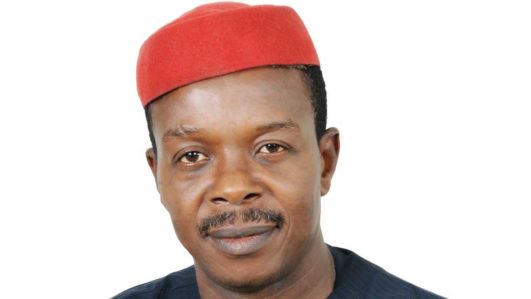
The current Senator representing Imo State, specifically the Imo North Senatorial District, is Chiwuba Patrick Ndubueze. He is a member of the All Progressives Congress (APC) and is serving his first term as a Senator in the 10th Senate.
One detail that stands out in his current Senate role is committee leadership: in the 10th Senate, Sen. Patrick also serves as the Chairman of the Senate Committee on Works. In Nigeria’s governance structure, a Works-focused portfolio is closely linked to infrastructure outcomes—roads, public buildings, and the broader framework that supports connectivity and national development.
From a geographic point of view, “works” is one of the most place-sensitive policy areas. Infrastructure determines how people experience the state. If a major route is rehabilitated, travel time drops and markets expand. If bridges are strengthened, goods move more reliably and transport prices stabilize. If road shoulders and drainage are properly engineered, communities face fewer washouts during heavy rains. In Imo State—where rainfall can be intense and where erosion can rapidly undermine poorly constructed roads—this committee role is particularly significant. It positions Senator Ndubueze within the institutional space where infrastructure priorities are discussed, monitored, and sometimes challenged through oversight.
Besides his chairmanship role, he is also a member of the committee on Ethics, Privileges, and Public Petitions. While that may sound more procedural than developmental, it still has practical implications. Public petitions often arise from real place-based grievances: disputes over public projects, allegations of unfair treatment, access issues, or conflicts involving government agencies. A functional petitions process can provide citizens with a pathway to seek redress, especially where bureaucratic systems feel distant or unresponsive.
During the elections that brought him to the Senate, the provided figures show that Sen. Patrick secured his position with a substantial lead. He had a total of 56,261 votes, reflecting strong support within the district. This number is more than a statistic; it is a signal of political legitimacy across the geography of the district—support distributed across wards and communities that collectively form the constituency.
In the same contest, Emmanuel E. Okewulonu from the People’s Democratic Party (PDP) trailed with 32,256 votes. The text also lists other candidates: Ifeanyi Godwin Ararume from the Labour Party (LP), who received 21,179 votes, and Uchenna Henry Okike from the All Progressives Grand Alliance (APGA), who had 968 votes. Election outcomes like this matter because they often shape the political “map of expectation.” Communities that voted strongly for a Senator may anticipate quick visible returns—constituency outreach, representation in debates, or advocacy for federal projects.
So what does representation in Imo North often involve in practical geographic terms? While each district contains diverse communities, Imo North is frequently discussed as an area where connectivity, environmental vulnerability, and access to services can strongly shape day-to-day experience. In many Nigerian districts, the “north” sections tend to include mixed terrain and a blend of semi-urban and rural settlement patterns. Where settlements are more dispersed, the cost of providing services rises, and the district becomes more sensitive to road conditions. This makes infrastructure leadership highly relevant.
As Chairman of the Senate Committee on Works, Senator Ndubueze is positioned to influence how infrastructure conversations are framed nationally. For constituents, the most meaningful outcomes are typically those that reduce the burden of movement and strengthen public access. In geographic terms, a road does not only connect points A and B; it connects people to opportunity—schools, hospitals, markets, and administrative services.
When evaluating the impact of a Senator with a strong infrastructure-related committee role, it helps to look beyond headlines and consider a few measurable indicators:
- Oversight visibility: Is the Senator actively scrutinizing project quality and timelines, especially for federal infrastructure that affects the state?
- District connectivity outcomes: Do key routes and public works in the district improve in reliability and safety over time?
- Risk reduction: Are drainage and erosion control treated as part of road infrastructure rather than afterthoughts?
These are the kinds of questions that connect Senate work to real geography—the everyday map of movement and vulnerability within Imo North.
2. Ezenwa Francis Onyewuchi
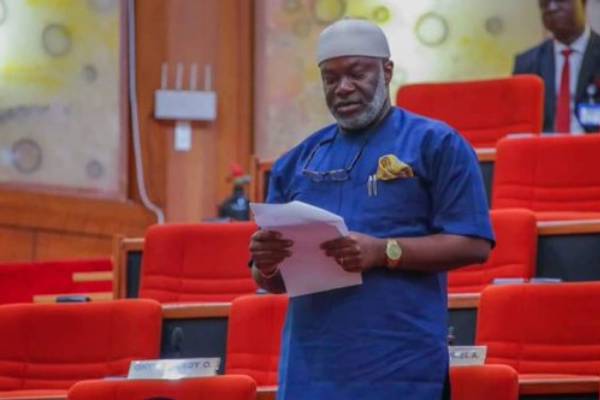
The current Senator representing Imo East is Ezenwa Francis Onyewuchi. He assumed office in June 2019, succeeding Samuel Anyanwu. In the Senate, longevity matters because legislative effectiveness often increases with familiarity: understanding Senate rules, developing committee influence, building cross-party relationships, and learning how to translate constituency needs into policy language that can survive national negotiation.
Onyewuchi’s political experience includes service in the House of Representatives from June 2011 to June 2019, representing the Owerri-Municipal/Owerri-North/West Federal Constituency of Imo State. This background is relevant because it combines local constituency work with national legislative practice. A representative who has worked across both chambers often has a broader institutional view of how federal decisions reach communities.
From a geographic standpoint, Imo East is closely linked—through popular civic understanding—to the Owerri axis, which is one of the state’s major urban and administrative hubs. Urban and peri-urban districts carry specific development pressures: road congestion, housing expansion, drainage problems, waste management, and high demand for jobs. The “political geography” of such districts is shaped by density. When population density rises, public demand becomes more visible and more immediate, and small failures in services (like blocked drains) can escalate quickly into city-wide problems (like flooding and disease outbreaks).
Born on April 2, 1968, in Imo State, Nigeria, Onyewuchi attended the University of Nigeria, Nsukka. Beyond his political career, he is also described as a businessman. Business experience is often relevant in districts with urban market economies because it can shape attention to commerce, investment climate, transport costs, and small enterprise support. Urban economies are networks: markets depend on road access, electricity reliability, and the predictability of governance and security conditions.
In the Senate, Onyewuchi currently serves as the Vice-Chairman of the Senate Committee on State and Local Government. For an expert geographer, this is a highly significant committee focus because state and local governance is where geography becomes policy in the most direct way. Local governments are responsible for many of the “nearby” services that structure daily life: primary roads, local markets, sanitation arrangements, and community-level development initiatives.
When local governance is effective, communities tend to experience better service distribution and faster responses to local problems—like blocked drainage, small bridge failures, or market sanitation issues. When local governance is weak, the opposite happens: problems accumulate until they become emergencies, and citizens are forced to seek help from higher levels of government, which often respond more slowly due to distance and bureaucracy.
This is why a Senate committee focused on state and local government matters. It speaks to:
- Fiscal geography: how resources are allocated and managed across levels of government.
- Administrative geography: how boundaries and governance systems affect service delivery.
- Equity and access: whether remote communities receive the same attention as more central locations.
Onyewuchi has received recognition for his contributions, including the NUJ Legacy Award. Awards can be symbolic, but symbolism also has practical relevance in politics: it can strengthen credibility, expand networks, and increase a lawmaker’s capacity to build coalitions. In a state where public trust can be fragile—especially during periods of economic difficulty or insecurity—credibility is a resource.
In terms of district needs, Imo East’s representation often intersects with city-region planning. As towns expand, land use changes: residential areas sprawl, green spaces shrink, and drainage pathways are disturbed. These processes can worsen flooding and erosion if not managed carefully. Senators, while not city planners, can influence funding priorities, urban resilience programs, and regulatory frameworks that affect housing, infrastructure quality, and environmental safeguards.
Citizens who want to evaluate Imo East representation can focus on questions that connect governance to the lived environment:
- Is the Senator visible in debates and oversight related to governance efficiency and local development?
- Does his committee role translate into attention for service delivery challenges affecting communities in Imo East?
- Are urban and peri-urban pressures—drainage, roads, security, youth jobs—treated as connected issues rather than isolated complaints?
These questions highlight the fundamental geographic truth: good governance is partly the ability to deliver services across space—fairly, reliably, and in a way that matches how people actually live and move.
3. Bonaventure Osita Izunaso
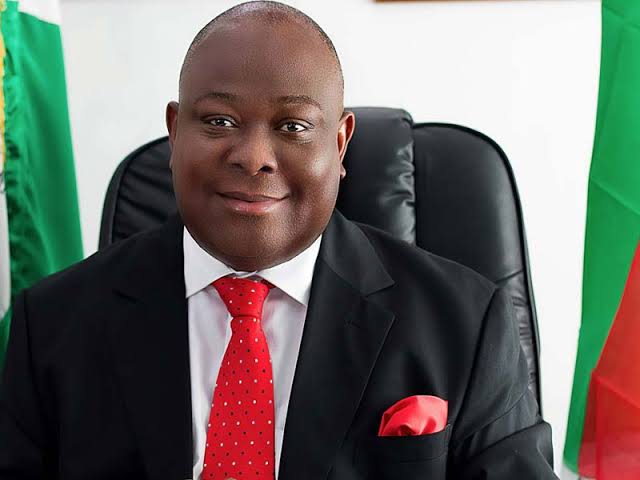
Osita B. Izunaso has been the current Senator for the Imo West (Orlu) constituency in Imo State, Nigeria, since June 2023, representing the All Progressive Congress (APC). Imo West is often discussed as one of the state’s most politically active and densely populated zones, with strong networks of towns and markets. In such districts, representation is frequently evaluated through a mix of visible advocacy and behind-the-scenes committee influence.
Izunaso has a background in journalism and holds a BA (Hons) from the University of Jos, a post-graduate degree in journalism from the University of Abuja, and an MBA from the University of Calabar. This blend of communication training and management education is relevant because politics is not only about policy choices; it is about explaining policy clearly, building coalitions, and managing complex institutional relationships. Communication shapes governance outcomes: when the public understands what policies mean, trust improves; when communication is weak, rumor and misunderstanding can dominate civic life.
The profile provided notes that he worked in institutional communication roles, including as Chief Press Secretary to the Speaker and Senate President. Such roles are usually close to the center of national political decision-making. They expose an individual to the “procedural geography” of governance: how decisions move from proposal to approval, how institutions coordinate, and how political negotiation shapes final outcomes. This experience can be valuable for a legislator who must navigate Senate processes efficiently.
He also served as Minister of Labour & Productivity. Labour portfolios connect strongly to human geography: employment patterns, workforce skill levels, migration decisions, and the stability of households. When unemployment rises, people move—often toward larger cities—changing the settlement geography of a state. Labour policy is therefore not only economic; it is spatial. It shapes where people can realistically build livelihoods.
Izunaso has been active in several committees during his time in the Senate, including Rules & Business, Local and Foreign Debts, Housing, Gas, Foreign Affairs, and Sports. These committee themes cover a wide range of national concerns, but they also map onto real local outcomes. For instance:
- Housing connects to how towns expand, land markets operate, and urban planning pressures are managed.
- Gas relates to energy systems, industrial development, and household fuel transitions—important in a country balancing cost and environmental impact.
- Local and Foreign Debts relates to national fiscal capacity, which determines whether infrastructure and social services can be funded sustainably across states.
- Foreign Affairs influences cross-border trade and migration systems, including how Nigeria positions itself in regional economic networks.
He has sponsored bills covering various areas such as transportation, conflict resolution, language preservation, and oil pipelines. Even without debating the full details of each bill, we can interpret the geographic logic behind these themes. Transportation is the infrastructure of connection; conflict resolution is the governance of coexistence; language preservation relates to cultural geography and identity; and oil pipeline policy touches environmental risk, land rights, and the distribution of resource benefits and costs.
Before his senatorial position, Izunaso served as the National Organizing Secretary. Such organizational roles are relevant in Nigerian politics because parties operate as networks across space—ward structures, local mobilization, and inter-state alliances. Organizing experience can strengthen a politician’s ability to build coalitions and navigate political structures that influence committee assignments and legislative bargaining.
He also chaired the National Automotive Design and Development Council Governing Council, contributing to the growth of Nigeria’s automotive sector. Automotive development is not only an industry topic; it is part of a broader mobility economy. Vehicle supply and maintenance systems influence transport costs, logistics efficiency, and the availability of affordable mobility for households and businesses.
Additionally, Izunaso founded the KpaKpando Foundation, a non-profit organization aimed at empowering individuals with disabilities. From a human geography perspective, disability inclusion has a strong spatial dimension. People with disabilities often experience mobility barriers—poor sidewalks, inaccessible public buildings, limited transport options, and exclusion from employment networks. Advocacy that improves accessibility can expand the “usable space” of everyday life for many citizens, enabling fuller participation in education, work, and civic activity.
In August 2023, he was appointed chairman of the Senate Committee on Capital Market, where he continues to drive positive changes in the financial landscape. Capital markets may sound distant from local concerns, but their impacts are ultimately geographic. Where investment flows, jobs and infrastructure can follow. When the investment environment improves, states can benefit through stronger business growth and expanded opportunities—especially when local entrepreneurs can access finance and when infrastructure projects can be funded more sustainably.
For Imo West, citizens often focus on development questions that revolve around density and opportunity: road capacity, traffic and transport reliability, youth employment, and the functioning of public institutions. In a densely networked district, small infrastructure failures can create large disruptions because more people are affected. A Senator’s role is therefore partly about prioritizing issues that produce the greatest benefit for the largest number of people, while ensuring that smaller communities within the district are not overlooked.
Comparing Imo North, Imo East, and Imo West: Three Districts, Three Development Emphases
All three senatorial districts share certain statewide challenges—jobs, infrastructure, education, security, and environmental risk. Yet each district often experiences these issues with different intensity and in different forms because of settlement patterns and connectivity.
A useful way to think about the districts—without oversimplifying—is this:
- Imo North can be interpreted as a development space where connectivity and risk management matter strongly—ensuring communities remain linked to markets and services even during heavy rains.
- Imo East often carries strong urban and administrative pressures—where service demand is high and infrastructure must keep up with population concentration and city-region growth.
- Imo West frequently reflects high political activity and dense settlement networks—where employment, mobility, and institutional effectiveness become highly visible daily concerns.
These are not rigid categories, but they provide a practical lens for interpreting what each Senator may prioritize and why committee roles can be significant. For example, a Works committee chairmanship naturally resonates with districts where roads and erosion control are recurring worries. A State and Local Government committee role aligns with districts where local service delivery and governance coordination are crucial. A Capital Market committee chairmanship can align with broader economic and investment ambitions that affect job creation and business development.
Why Knowing Your Senators Matters: The Civic Value of Representation
Many citizens only pay attention to representation during election seasons. But senatorial work continues every week through committee meetings, oversight visits, budget reviews, and legislative debates. When citizens remain informed, accountability becomes easier. And accountability, in development terms, is a powerful tool: it increases the likelihood that projects are completed, that policies are explained, and that neglected areas gain attention.
In geographic terms, staying informed helps communities do something important: it helps them communicate needs clearly. If a community can identify where flooding repeatedly occurs, which road segment fails every rainy season, or where a clinic lacks basic capacity, that information becomes actionable. Vague complaints are easy to ignore; specific, location-based evidence is harder to dismiss.
Here are practical ways to use this guide as a resident of Imo State:
- Connect issues to places: document problems with clear location descriptions and local landmarks.
- Engage as groups: town unions, traders’ associations, youth groups, and professional bodies often have stronger influence than individuals acting alone.
- Follow committee relevance: committees can be more important than slogans because they shape budgets and oversight.
- Ask for measurable signals: bills sponsored, motions raised, oversight actions taken, and advocacy for specific federal interventions.
In other words, civic engagement becomes more effective when it is grounded in geography—the real map of what communities experience.
Conclusion: Imo’s Senators and the Geography of Development
The current Senators representing Imo State—Chiwuba Patrick Ndubueze (Imo North), Ezenwa Francis Onyewuchi (Imo East), and Bonaventure Osita Izunaso (Imo West)—operate at Nigeria’s national legislative level, but their work is felt locally through infrastructure decisions, governance oversight, and the policies that shape everyday life.
As a geographer, I emphasize one central idea: politics leaves footprints. You can see those footprints in road quality, in drainage performance during rainfall, in the ease of moving goods to markets, in the availability of public services, and in whether communities feel safe enough to farm, trade, and travel. Senators matter because they influence which footprints appear—and whether those footprints lead toward resilience and development or toward neglect and vulnerability.
To stay informed, revisit this list when election cycles approach, follow legislative updates, and pay attention to committee work. The most informed communities are often the most effectively represented, because they can demand results with clarity and consistency.